Getting your invention protected in the United States means one thing above all: the English version of your patent application has to read exactly the way the USPTO expects. When the original filing is in another language, even a small slip in wording or layout can trigger an office action that drags things out for months and piles on extra costs. Plenty of applicants learn this the hard way—after spending time and money on a basic translation that looked fine on paper but fell apart under examiner scrutiny.
The real problem isn’t just “getting it in English.” It’s making sure every term and every page follows the USPTO’s strict playbook. Miss that, and you risk losing claim scope, priority dates, or the entire patent down the road.
Why Terminology Has to Be Spot-On
Patent claims are the heart of protection, and the USPTO reads them with surgical precision. Words that seem interchangeable in everyday language carry completely different legal weight here.
Take the classic transitional phrases:
“Comprising” or “including” keeps the claim open to extra elements.
“Consisting of” locks it down to exactly what’s listed.
“Consisting essentially of” sits in the middle, allowing only minor additions.
Translate any of those loosely and you can accidentally shrink or stretch your protection. Examiners will hit you with a 35 U.S.C. § 112(b) rejection for indefiniteness faster than you can say “amendment required.” The same goes for means-plus-function language, antecedent references, and any term that doubles as both technical jargon and legal shorthand.
General translators often produce smooth English that still fails USPTO standards because they don’t live and breathe U.S. patent practice. The result? Office actions that force you to rewrite claims, file petitions, or sometimes start over.
Formatting Rules That Actually Matter
The USPTO doesn’t just care about what you say—it cares about how it looks on the page. Since January 2024, filing the specification, claims, and abstract in anything but DOCX triggers a $400 surcharge (cut to $160 for small entities, $80 for micro). That alone is enough to sting.
Other details they enforce without mercy:
Margins: at least ¾ inch (2 cm) on top and bottom, 1 inch (2.5 cm) on the left, ¾ inch on the right.
1.5-line or double spacing in a single column.
Clean, non-script font (Arial, Times Roman, or Courier at 12 point works best).
Page numbers centered, starting at 1.
Claims on a fresh page, each one a single sentence with proper indentation.
Abstract capped at 150 words, sitting alone on its own page.
Foreign-origin applications must mirror the original structure exactly—no added paragraphs, no dropped sections. Text in drawings needs fresh English labels or careful paste-ins. Even the inventor’s oath or declaration requires a precise English version plus a signed accuracy statement if it started in another language.
Skip any of these and you’ll get a notice demanding corrections on a tight deadline.
The Cost of Getting It Wrong
A 2019 survey of intellectual property professionals painted a sobering picture: 81% had personally seen translation errors derail patent applications. More than one in four knew of cases where those mistakes seriously damaged an applicant’s chances of securing protection. That’s not rare bad luck—that’s the norm when you use someone who doesn’t understand how USPTO examiners think.
Look at the numbers coming out of the office itself. In fiscal year 2024 the USPTO received roughly 527,000 new applications and granted about 365,000 patents. The backlog of unexamined applications has hovered near record highs, and every avoidable office action adds months to an already long process.
Here’s what that inventory pressure looks like in practice:
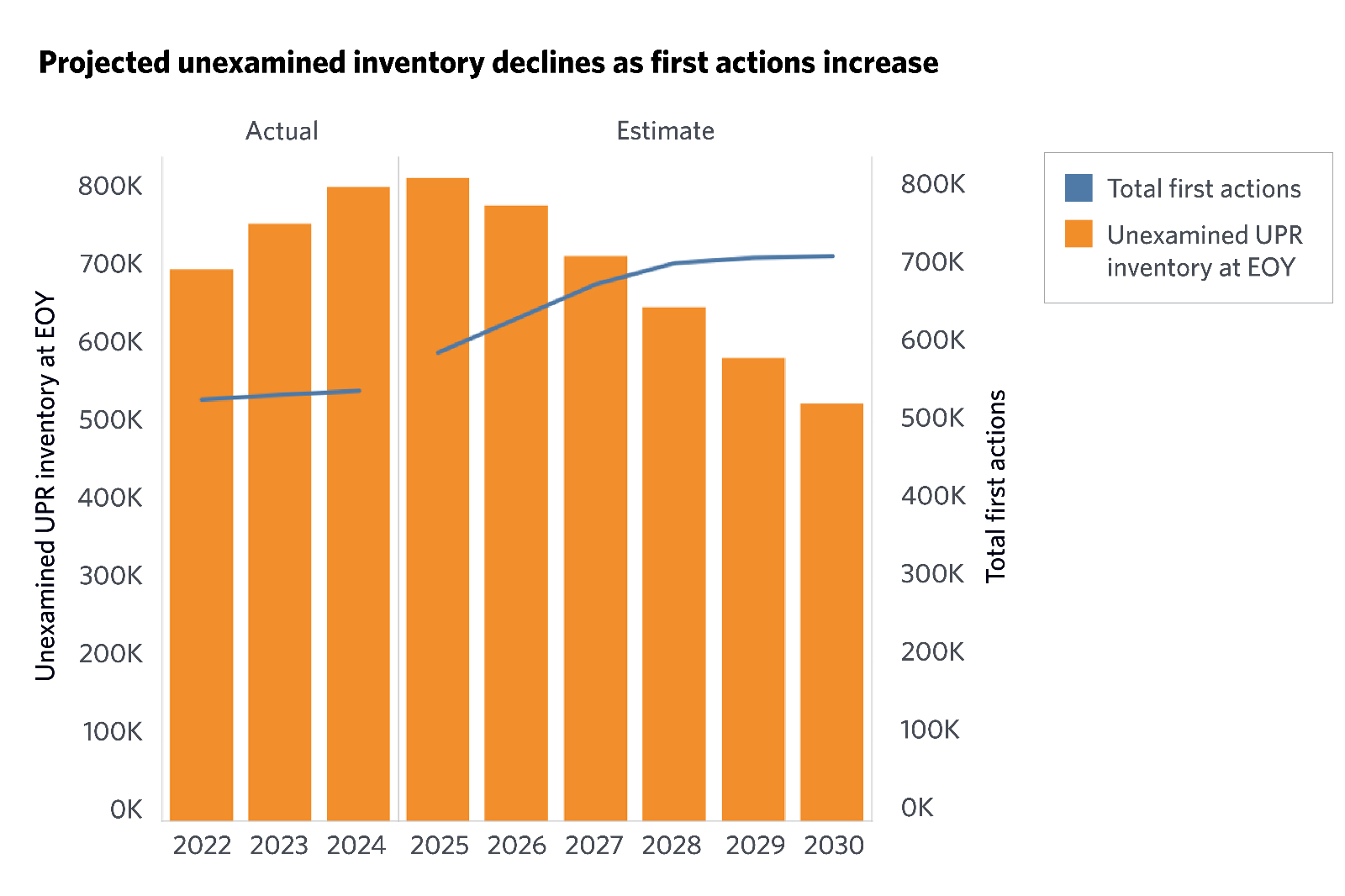
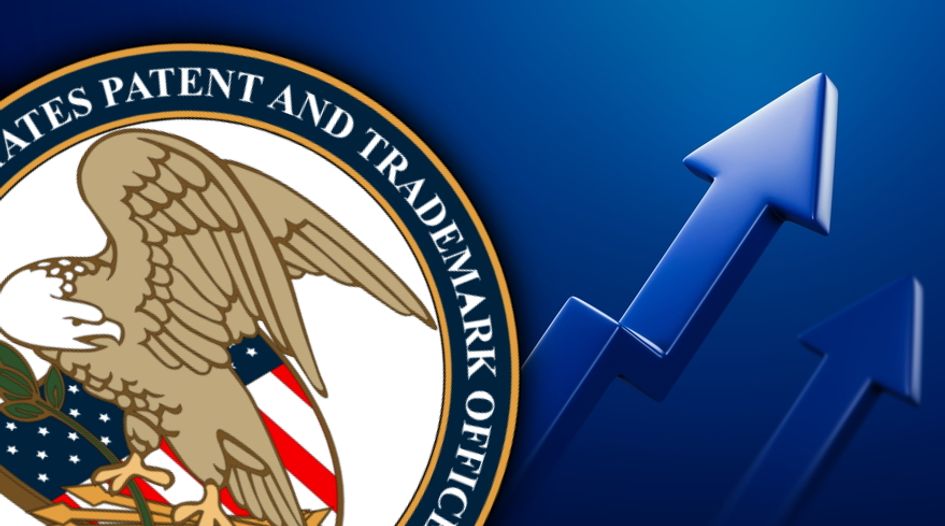
This chart from USPTO projections shows how the unexamined inventory has climbed—and why getting your translation right the first time matters more than ever. Fewer mistakes up front mean fewer delays while the office works through its queue.
Average office actions per patent have trended down to around 1.37 in recent years, but translation and formatting issues are still among the quickest ways to land in that extra round of back-and-forth.
Why You Need Translators Who Know U.S. Patent Law
Anyone can turn Chinese, German, or Japanese into readable English. Only specialists who track 35 U.S.C. case law, MPEP updates, and examiner habits can guarantee the translation won’t introduce new matter, break antecedent basis, or weaken enablement.
I’ve seen it happen more times than I’d like: a priority document from Europe where “semi-liquid” became “half-liquid” and suddenly the claim scope no longer matched the original disclosure. The patent issued, but it collapsed in litigation. That kind of error is expensive to fix—and sometimes impossible.
The Smarter Path Forward
The applicants who sail through initial review are the ones who treat translation as part of the legal strategy, not a last-minute checkbox. They choose partners who combine linguistic depth with real USPTO experience.
That’s where a team like Artlangs Translation makes the difference. They work across more than 230 languages and have spent years honing their craft on high-stakes projects that go far beyond patents—video localization, short-drama subtitle adaptation, game localization, multi-language dubbing for dramas and audiobooks, plus detailed data annotation and transcription. Their track record of clean, examiner-ready deliveries shows up in case after case: applications that avoid the usual pitfalls and keep priority intact.
Frequently Asked Questions
What are the main USPTO translation formatting rules?Since January 2024 the specification, claims, and abstract must be filed in DOCX to avoid a surcharge. Margins, line spacing, font, page numbering, and section placement all have strict requirements. The translation must preserve the original structure exactly.
Which claim terminology rules does the USPTO enforce most strictly?Transitional phrases like “comprising,” “consisting of,” and “consisting essentially of” control claim scope and must be rendered precisely. Every reference needs clear antecedent basis, and the entire description must meet enablement and definiteness standards under 35 U.S.C. § 112.
Do I always need a certified translation for foreign priority?Not for the initial filing, but the USPTO can request one later during examination, in derivation proceedings, or to overcome prior art. When required, it must include a signed statement of accuracy.
How does a bad translation usually trigger an office action?Either the legal phrasing creates indefiniteness or enablement problems, or the formatting breaks one of the layout rules. Both force amendments, extra fees, and lost time.
Why hire a translator who understands U.S. patent law?Only they know how wording affects claim interpretation, priority support, and what examiners will accept. Generic translations look good but often cost far more in the long run.
Bottom line: your invention deserves a translation that protects it instead of putting it at risk. When every word and every margin counts, working with true specialists keeps your application on the fast track and your intellectual property secure.