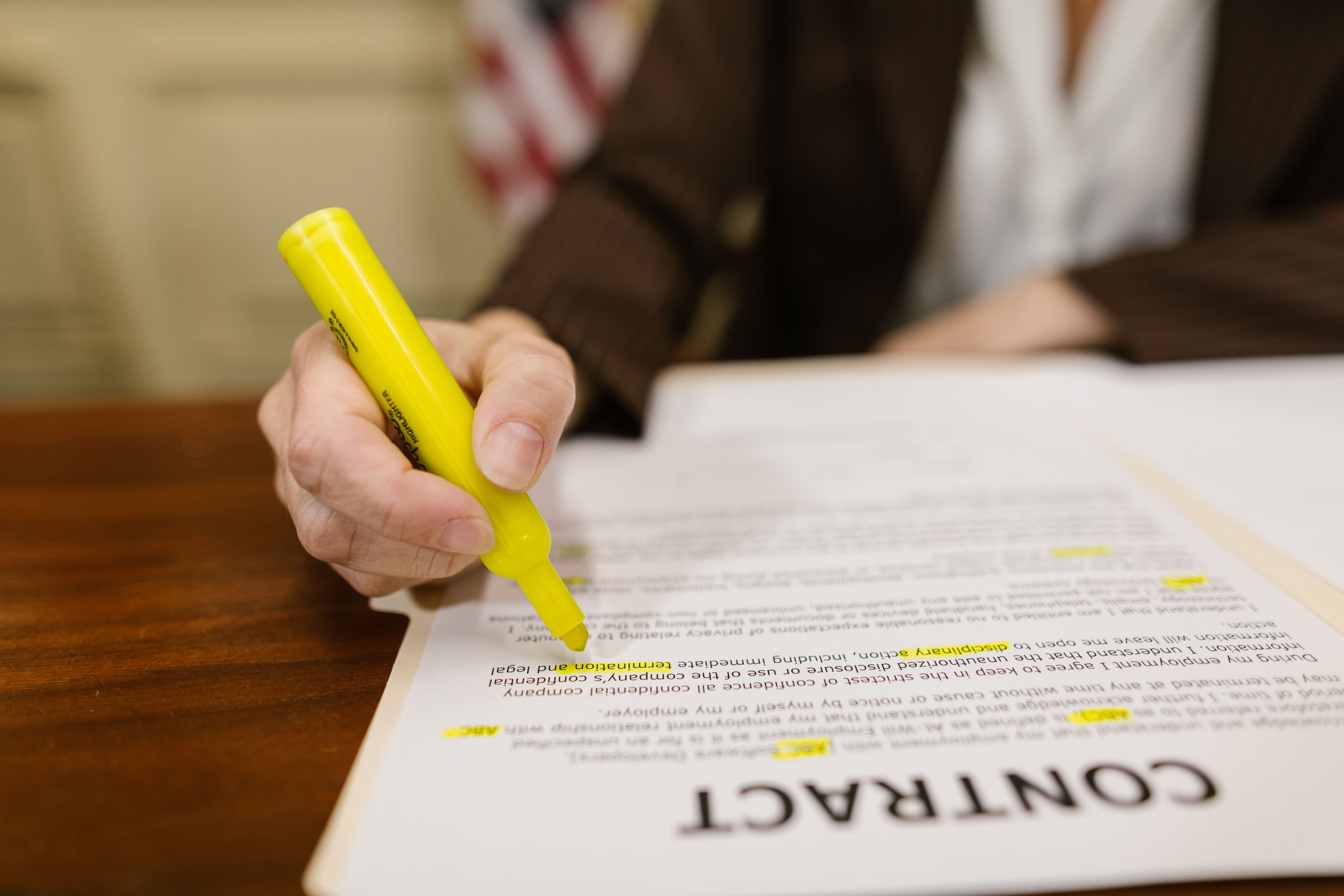
Foreign applicants and their counsel regularly confront a practical reality at the USPTO. Examiners work almost exclusively in English. Non-English prior art, priority documents, and supporting materials must therefore cross a linguistic bridge that is both accurate and usable. A translation that is merely “good enough” can still trigger an Office Action, delay prosecution, or create later enforceability problems. The gap is rarely about basic grammar. It is about whether the English text reads the way a U.S. patent attorney expects it to read and whether it meets the specific formal requirements set out in the Manual of Patent Examining Procedure.
Under MPEP 609.04(a) and 37 CFR 1.98, an Information Disclosure Statement that lists non-English documents must include either a complete English translation (when one is in the applicant’s possession or readily available) or a concise explanation of relevance prepared by the person most knowledgeable about the content. An English-language abstract from a foreign patent office or an English version of a foreign search report can sometimes satisfy the concise-explanation requirement. Examiners are not required to order full translations themselves; they consider the material to the extent it is understood from the explanation, drawings, and chemical formulas. Submitting a translation that is incomplete, poorly formatted, or inconsistently terminology-heavy therefore risks the examiner treating the reference as only partially considered—or, worse, prompting a formal deficiency notice.
Priority claims raise a higher bar. When a U.S. application claims the benefit of a non-English foreign application, a certified English translation of the certified copy is often required, particularly when the priority claim is material to patentability or when an interference is declared. For national-stage entry of a PCT application filed in another language, an English translation of the international application as filed must be submitted. The translation must cover the entire application, including text that appears in the drawings. Partial or selective translations are routinely rejected.
These rules are not theoretical. In IBSA Institut Biochimique, S.A. v. Teva Pharmaceuticals USA, Inc. (Fed. Cir. 2020), a pharmaceutical patent claiming priority from an Italian application was held indefinite under 35 U.S.C. § 112. The Italian term “semiliquido” had been rendered in the U.S. specification and claims as “half-liquid.” A later certified translation used “semi-liquid.” The Federal Circuit found the chosen English term ambiguous in the pharmaceutical context and declined to treat the Italian original as controlling once the U.S. application had been filed with material differences. The patent was invalidated. The case is frequently cited by practitioners as a reminder that translation choices made at filing can become permanent claim-construction problems years later.
U.S. patent attorneys who review foreign-origin applications look for more than dictionary accuracy. They expect consistent terminology across the specification, claims, and drawings. A part called a “shaft” in one paragraph should not become a “rod” or “axle” later without clear reason. Claim language should preserve the original scope—neither broadened nor narrowed by the translator’s interpretive choices. Sentence structure and paragraph breaks are preferably retained so that a later court or examiner can map the English text back to the source. Overly polished or “naturalized” English that alters technical nuance is often less useful than a more literal rendering that preserves ambiguity where the original was ambiguous. Machine translations have improved and are accepted by the USPTO for many examination purposes, yet experienced counsel still require human review by translators familiar with both the technology and patent claim drafting conventions before filing or before relying on the text in an IDS or response.
The same pressures appear in other major jurisdictions, though the formal rules differ. Research examining large families of English-origin applications translated into Chinese, Japanese, and Korean has shown that greater ambiguity in the original English text correlates with lower grant rates—sometimes by double-digit percentage points—after translation. European and Asian offices also rely on machine tools for initial screening, but applicants still face the risk that an imprecise rendering will generate new prior-art rejections or limit claim scope. Global filers therefore treat high-quality translation as a single investment that reduces risk across multiple offices rather than a series of isolated local tasks.
Practitioners who handle these files successfully treat translation as part of the prosecution strategy rather than a clerical step. They supply glossaries early, flag terms of art that have established meanings in the relevant field, and request that the translator flag source-language ambiguities instead of silently resolving them. They also insist on consistent formatting so that reference numerals, claim dependencies, and sequence listings align with USPTO electronic filing requirements. These habits reduce the chance that an examiner will issue a form paragraph citing 37 CFR 1.98 deficiencies or that later litigation will turn on a disputed English term.
Artlangs Translation has spent more than twenty years producing the kind of patent and technical translations that U.S. counsel and foreign applicants rely on for USPTO filings. Working across 230-plus languages with a network of more than 20,000 specialized linguists, the company has supported numerous successful patent families, IDS submissions, and national-stage entries. In addition to patent work, Artlangs provides video localization, short-drama subtitle localization, game localization, multilingual dubbing for short dramas and audiobooks, and large-scale multilingual data annotation and transcription. The combination of domain expertise, process discipline, and scale allows teams to deliver English that is both USPTO-compliant and comfortable for American patent attorneys to read and rely upon.