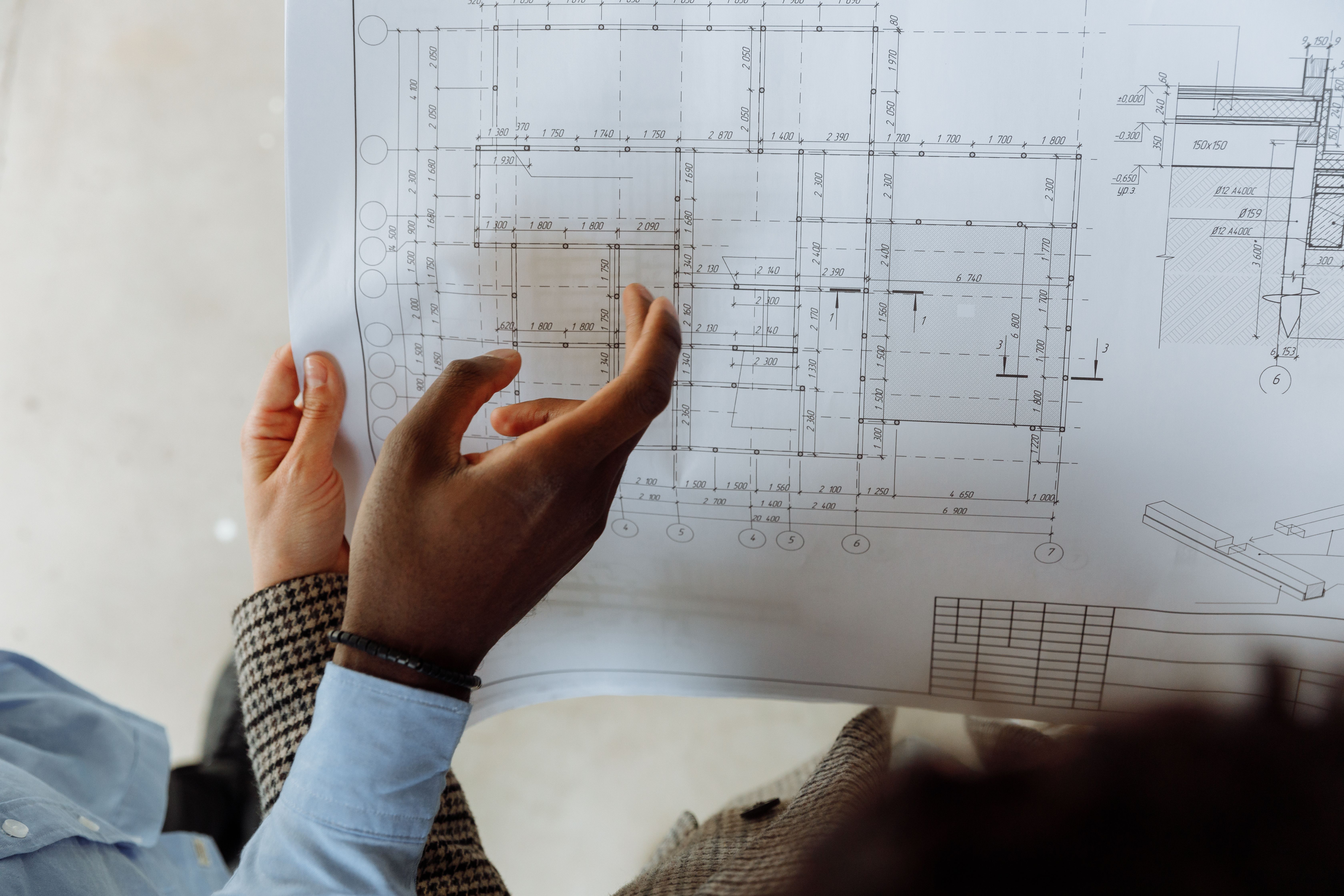
A mechanical assembly drawing leaves the design office looking clean. Layers are organized, GD&T callouts sit precisely against the geometry, material designations match the regional standard the fabricator expects, and every leader line points exactly where it should. Months later the same file arrives at a plant in another country and production slows or stops. Text has overflowed and covered critical edges. Layer names no longer match the local filtering conventions. A tolerance modifier has been rendered in a way that changes the functional requirement. Fonts have substituted into boxes or wrong metrics. The drawing is no longer production-ready.
This is not a translation problem in the ordinary sense. It is a file-structure, visual-engineering, and standards-interpretation problem that happens to involve language.
Where the Geometry and the Language Collide
CAD files store text as objects bound to geometry—single-line TEXT, multi-line MTEXT, block attributes in title blocks, dimension and multileader annotations, table cells. Those objects live on specific layers alongside centerlines, hatches, and construction geometry. Generic extraction that dumps everything onto layer 0 or converts the drawing to a flat PDF destroys the associations that make the file usable downstream. Native DWG or DXF workflows that edit text entities in place while locking geometry and dimension styles are the only practical way to keep the deliverable editable and plot-ready.
Text expansion makes the layout problem acute. English-to-German or English-to-Russian technical strings routinely grow 25–35 percent; many Romance languages expand 15–30 percent. A compact English note such as “Valve” becomes “Absperrventil.” In a dense title block or beside a tight leader the extra characters either overflow the available space or sit on top of lines and dimensions. Professional DTP is not cosmetic cleanup after translation; it is an engineering adjustment of text styles, leader lengths, note placement, and occasionally controlled line breaks while the underlying geometry remains untouched. Teams that treat the drawing as a constrained design problem rather than a word-processing task produce files that still look and behave like engineering documents.
Font compatibility adds another failure mode. Older drawings frequently rely on SHX shape fonts or specialized TrueType technical faces that lack glyphs for the target script. Missing fonts produce question marks, boxes, or substituted metrics that change wrapping and spacing. Planned font mapping or substitution, performed before or during the localization pass and validated across the full sheet set, prevents the garbling that forces later rework.
GD&T, Material Codes, and the Cost of Plausible Mistakes
Geometric dimensioning and tolerancing is not decorative annotation. ASME Y14.5 and the ISO GPS system share many symbols yet differ in default principles (envelope versus independence), datum treatment, and certain modifiers. A positional tolerance versus a surface profile, an MMC versus LMC material condition, or an incomplete datum reference frame is not interchangeable. Material designations (AISI, DIN, JIS, GB equivalents) and heat-treatment notes must map correctly to the receiving region’s standards and supply chain.
Industry reviews of engineering documentation have repeatedly shown that a large share of downstream failures that look like design or machining problems originate in documentation that was linguistically plausible but engineeringly inaccurate. Documented cases include scrapped aerospace components, structural assemblies requiring hundreds of thousands of dollars in rework after a single welding or tolerance annotation was mishandled, and production stoppages when operators followed incorrect fit or torque instructions. Drawing discrepancies and revision mismatches more broadly contribute to estimated annual costs in the tens of billions across capital equipment and construction. These are not theoretical risks; they appear in audits of cross-border manufacturing programs.
The technical barrier is therefore dual. The people handling the file must be able to read a drawing the way a manufacturing engineer does—recognizing which notes are explanatory, which codes are inviolable, and which symbols carry functional weight under the governing standard—and they must also possess the CAD and DTP skill to keep layers, attributes, and visual hierarchy intact after text length changes. Most general language workflows lack one or both of those capabilities.
What Actually Works in Practice
Successful projects start with native-format files whenever possible. Geometry and critical dimension layers are locked. Text is isolated or carefully managed on its own layers. Terminology is controlled through project-specific glossaries that freeze dimensions, units, standard designations, part numbers, and GD&T symbols while translating only the explanatory notes, legends, and revision descriptions. Font substitution is planned in advance. Expansion space is anticipated, and any necessary layout adjustment is performed by people who understand both the visual hierarchy of engineering drawings and the target language’s typographic conventions. Conversion between DWG and DXF is validated for loss of dynamic blocks, constraints, or multi-layer entities.
The process is more expensive than ordinary document translation because the cost of getting it wrong is higher. Teams that treat CAD localization as an engineering step rather than a language step deliver files that can move straight into manufacturing and inspection without emergency redraws or shop-floor clarification loops.
Artlangs Translation has spent more than twenty years building exactly this combination of mechanical-drawing literacy and professional DTP capability across 230-plus languages. With a network of over 20,000 specialized collaborators and a track record of complex engineering, manufacturing, and technical-document projects, the company supports native-format CAD localization alongside broader services that include video localization, short-drama subtitle work, game localization, multilingual audiobook and short-drama dubbing, and large-scale data annotation and transcription. The same discipline that keeps layers intact and GD&T accurate on a mechanical assembly drawing is applied across those adjacent technical domains.
When drawings cross borders, the real work begins after the words are translated. The teams that understand both the language and the geometry keep production moving.