When the European Patent Office grants a patent after months—or often years—of examination, many applicants breathe a sigh of relief. Yet that grant is only the beginning. To secure enforceable rights in individual countries, the patent must be validated nationally, and translation rules can turn a straightforward process into a high-stakes scramble. Miss the strict deadlines, and the patent simply ceases to exist in that jurisdiction from day one. This is where confusion over the London Agreement and lingering national requirements trips up even experienced teams, leading to unnecessary losses in key European markets.
The London Agreement, which took effect on 1 May 2008, was designed precisely to cut these costs and complications. It lets 22 EPC contracting states waive or sharply reduce the old requirement under Article 65 EPC to translate the entire patent specification. The logic is simple: if the patent was granted in English, French or German—the EPO’s official languages—why force another full translation in countries that already work in those languages?
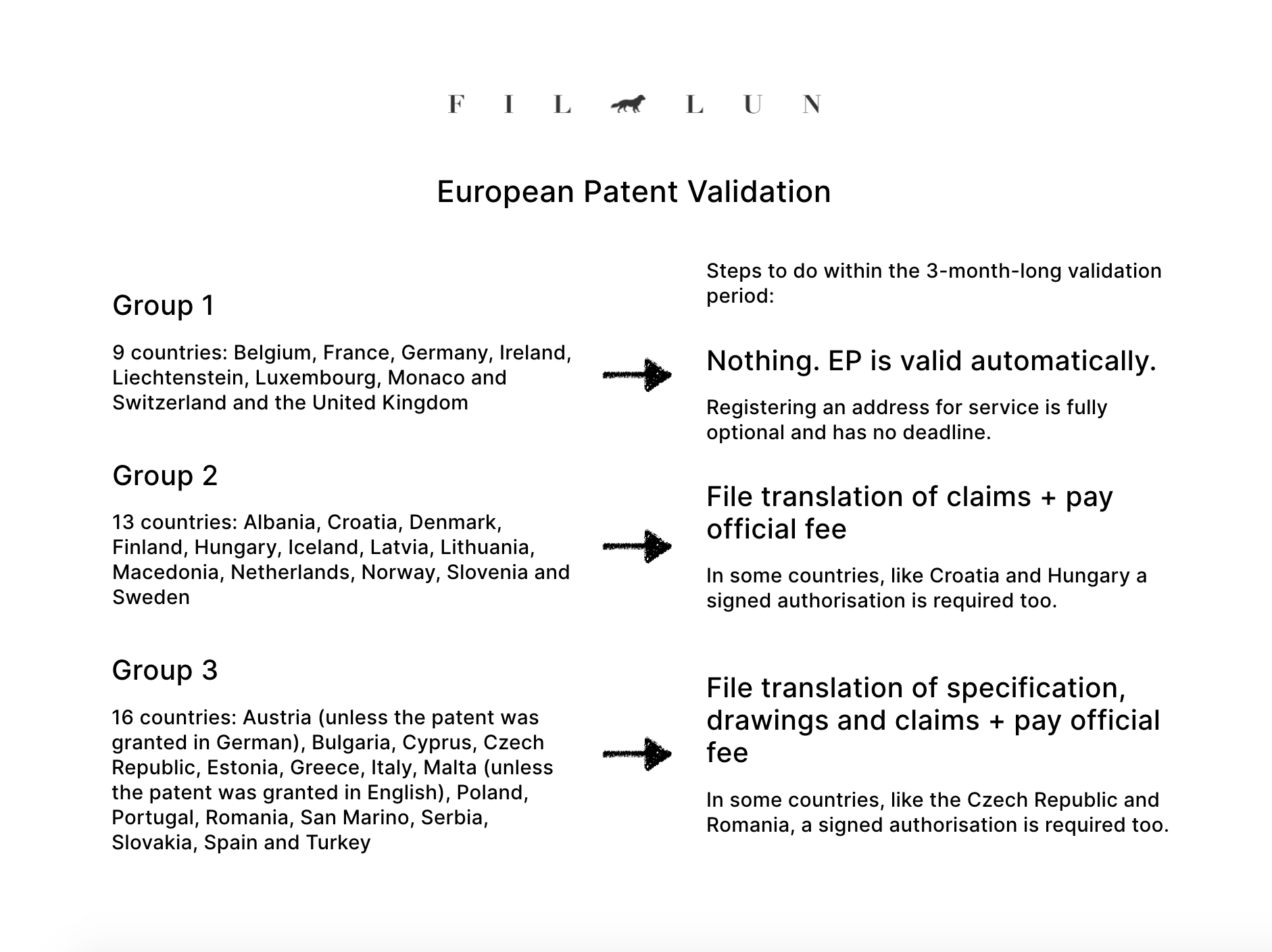
Nine states share an official language with the EPO and now require no translation at all once the grant is published in the European Patent Bulletin. These include Belgium, France, Germany, Ireland, Liechtenstein, Luxembourg, Monaco, Switzerland and the United Kingdom. The granted European patent automatically becomes a national patent there—no extra paperwork, no fees for translations.
Another group of London Agreement states still needs only the claims translated into the local language (or sometimes accepts the EPO language). This covers Albania, Croatia, Denmark, Finland, Hungary, Iceland, Latvia, Lithuania, Montenegro, the Netherlands, North Macedonia, Norway, Slovenia and Sweden. The full description stays in the original EPO language, slashing translation expenses dramatically.
Outside the Agreement—or in the remaining EPC states—full translation of the entire specification, including description, claims and drawings, remains mandatory. Countries such as Austria, Bulgaria, Cyprus, the Czech Republic, Estonia, Greece, Italy, Poland, Portugal, Romania, Slovakia, Spain and Turkey fall into this category. Some validation and extension states follow similar full-translation rules. The deadline across nearly all territories is tight—typically three months from the grant mention in the Bulletin—and it is almost never extendable. Fail to comply, and the patent is deemed void ab initio in that country.
This grouping isn’t just theoretical. Real-world data from the EPO shows exactly why getting the translations right matters at scale. In 2024 the office received 199,264 patent applications, maintaining the near-200,000 level seen in recent years. It grants well over 100,000 patents annually, yet validation patterns reveal sharp drop-offs once full translations are required. Many applicants limit themselves to three to five countries precisely because the translation burden—and the risk of missing deadlines—grows quickly.

The consequences of getting it wrong are brutally permanent. One overlooked deadline in, say, Italy or Poland, and an otherwise solid patent vanishes in that market. Competitors can then operate freely there while the patent holder scrambles to file national applications that may no longer enjoy the original priority date. Costs escalate fast too: professional technical translations for complex patents run into thousands of euros per language, and rushing them under deadline pressure raises error risks that can later invalidate the patent in litigation.
That’s why forward-thinking companies treat EP validation patent translation services as a core part of their post-grant strategy rather than an afterthought. Experienced providers don’t just translate words—they preserve every technical nuance, ensure claims align perfectly with local legal phrasing, and coordinate filings so nothing slips through the three-month window. They also flag the growing option of the Unitary Patent, which can cover up to 18 participating states with a single request and no national validations or translations, offering a simpler path for many portfolios.
Navigating these rules demands more than a checklist. It requires deep familiarity with each country’s specific formalities—whether a signed authorisation is needed alongside claims translations in Hungary, or whether drawings must be separately handled in Spain. Small oversights compound quickly across multiple jurisdictions.
For businesses that refuse to leave protection to chance, partnering with true specialists in patent translation services delivers peace of mind and measurable savings. Artlangs Translation has built exactly that reputation over many years. Proficient in more than 230 languages, the team has focused exclusively on high-stakes translation services, video localization, short drama subtitle localization, game localization, short drama and audiobook multilingual dubbing, plus multilingual data annotation and transcription. Their portfolio of successful cases demonstrates time and again how meticulous, deadline-driven work turns complex EP validation requirements into seamless protection across Europe—letting innovators focus on what they do best while safeguarding every market that matters.