────────────────────────────────────────────────────────────────────────────────
I got a call about two years ago from a project manager at a German heavy machinery manufacturer. They had just shipped 47 units of a new hydraulic press to a plant in Saudi Arabia, and the operations team at the plant had sent back a list of 89 questions about the operator manual. Not questions about how to operate the press — questions about how to read the manual. The Arabic translation was technically accurate in terms of terminology, but the layout had broken in ways that made the safety instructions unreadable. Warning callout boxes had lost their borders and now looked like regular paragraphs. Sequential step numbering had gone out of order because the right-to-left text flow had collided with the left-to-right diagram positioning. And a critical torque specification table had split across two pages with the header on the second page but the column labels on the first page, so the numbers on page two had no context.
The manufacturer had to fly two engineers to Saudi Arabia at their own expense to conduct in-person training and issue a corrected manual. The total cost, including the emergency travel, the rush reprint, and the delay in production ramp-up at the client site, was something like €180,000. The translation itself had cost €12,000. They had saved money on the translation by not including DTP in the scope, and that decision had cost them fifteen times the savings.
I want to be clear: the translation wasn’t wrong. The words were correct. But technical manual translation for industrial equipment isn’t about words. It’s about documents — structured, visual, safety-critical documents where the relationship between text and image is the thing that keeps operators from getting injured. If the translation process doesn’t account for that structure, the translation fails even when the terminology is perfect.
The problem most manufacturers don’t see coming is that technical documentation has two layers. There’s the linguistic layer — the words and sentences that describe the equipment, the procedures, the specifications. And there’s the visual layer — the layout, the diagrams, the callout boxes, the numbered steps, the warning icons, the tables with merged cells and rotated headers. The linguistic layer is what most translation providers handle. The visual layer is where things break.
When you translate from a left-to-right language like German or English into a right-to-left language like Arabic or Hebrew, the entire layout direction inverts. Text that was on the left side of a diagram now needs to be on the right. Bullet lists that pointed right now need to point left. Step numbers that were in the margin on the left now need to be on the right, and the step text needs to reflow around them. Tables with merged cells often break because the cell merging logic in most DTP software doesn’t handle RTL reversal correctly. The result is a document that technically contains all the translated text, but in a layout where the visual hierarchy no longer guides the reader through the procedure in the right order. In an industrial context, that’s not just a formatting problem. It’s a safety problem.
Desktop publishing for technical manuals, DTP, is the work that keeps the visual layer intact across languages. It’s not formatting in the cosmetic sense — choosing fonts and colors. It’s structural work: rebuilding the document flow so that the relationship between text elements and visual elements is preserved, even when the text direction changes. This requires someone who understands both the language and the document structure, and who has access to the original source files — InDesign, FrameMaker, whatever the technical documentation team used — not just a PDF export.
The manufacturers who try to skip DTP usually do it for cost reasons. They get a quote for translation, see that DTP adds 30-50% to the cost, and decide to handle the layout in-house or just accept whatever the translation provider delivers without the DTP step. What they don’t calculate is the cost of a broken manual reaching the field. I’ve seen three kinds of outcomes from that decision: the Saudi Arabia situation, where the layout failure was immediately visible and had to be fixed at emergency speed; a slower variant where the manual was technically readable but confusing enough that operators made mistakes during the first months of equipment use, leading to warranty claims and support escalations that ate into the profit margin on the sale; and the worst variant, where a safety warning that had lost its visual emphasis in translation was missed by an operator and someone got hurt. That last one has a cost that is hard to calculate and doesn’t show up in the project budget.
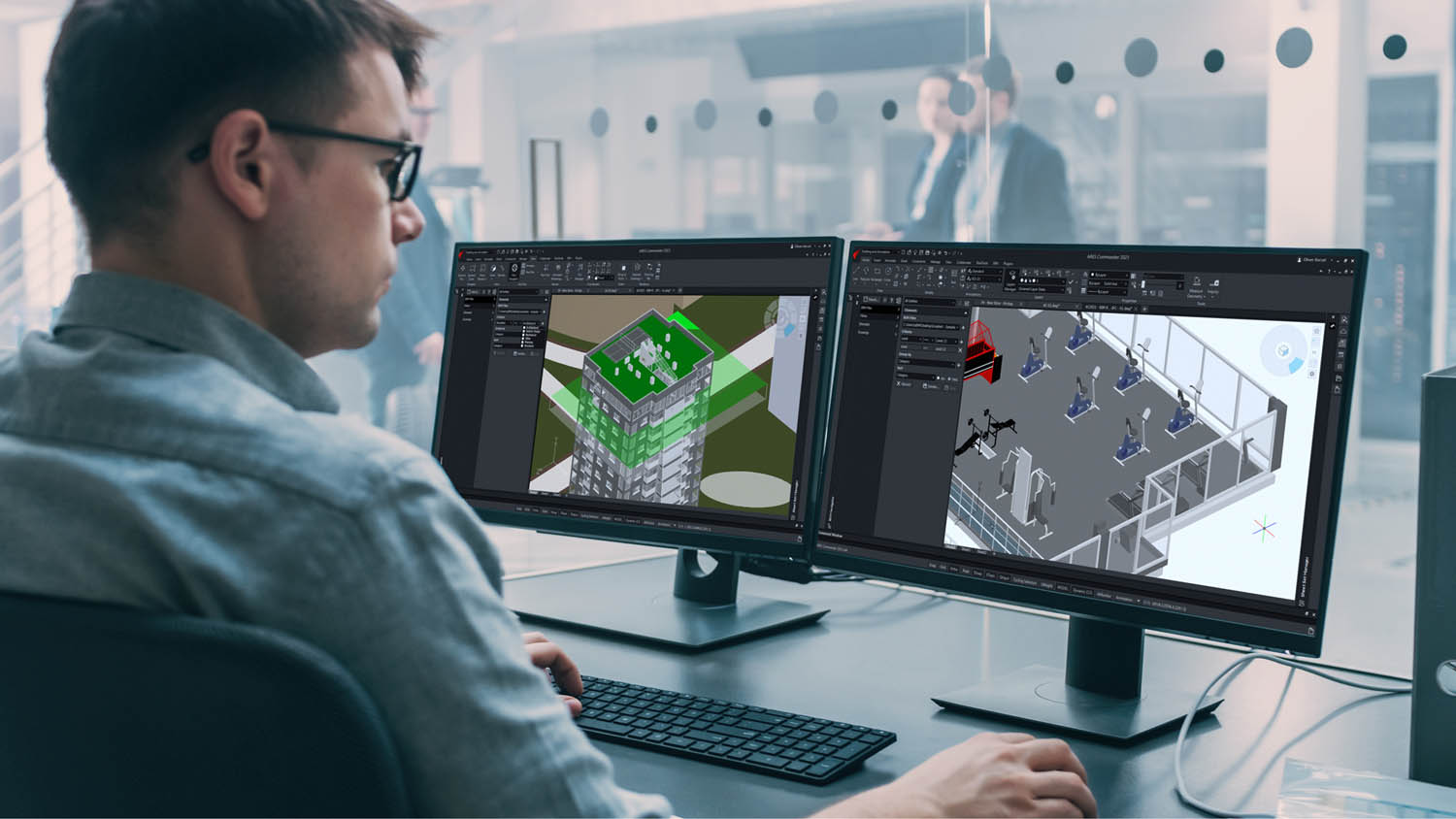
The DTP problem is connected to another problem that I see more often with Japanese manufacturers: CAD drawing translation. Technical manuals for industrial equipment often include engineering drawings — assembly diagrams, exploded views, wiring schematics — that were created in CAD software like AutoCAD, SolidWorks, or CATIA. These drawings have text annotations: dimension callouts, part numbers, material specifications, tolerance notations. When the manual is translated, the text in the drawings has to be translated too. But CAD text isn’t always extractable in a way that supports translation workflows.
In many CAD workflows, the text in a drawing is stored as geometry — lines and curves that visually form letters — rather than as editable text strings. Or the text is editable in the CAD software but the manufacturer only provides a PDF or image export of the drawing, not the native CAD file. In either case, the translation provider can’t just export the text, translate it, and re-import. They have to either manually retype the text in the target language and overlay it on the drawing, or they have to rebuild the annotation layer from scratch. Both are time-consuming and error-prone, and both require access to the original CAD files or a decision from the manufacturer about how much annotation translation is actually required.
I worked on a project for a Japanese injection molding machine manufacturer expanding into the German market. They had about 120 engineering drawings in their technical documentation. The German distributor had requested full German annotation on all drawings. The manufacturer’s technical documentation team had exported all the drawings as PDFs and sent them to a translation provider who didn’t have CAD capability. The provider quoted the project as a standard translation job, delivered the translated text in a Word file alongside the original PDF drawings, and expected the manufacturer to somehow apply the translations to the drawings. The manufacturer didn’t have the internal capacity to do that. The project stalled for six weeks while they found a new provider who could handle CAD, extracted the annotations from the native files, and re-annotated the drawings in German. The delay cost them the first quarter of sales momentum in the German market. They had budgeted for translation. They had not budgeted for CAD annotation work, because the original quote didn’t identify it as a separate scope item.
The thing about CAD drawing translation is that it sits in a weird gap between translation and engineering. Translation providers often don’t have CAD expertise. Engineering teams often assume translation is just text replacement and don’t realize the drawings need special handling. The result is a lot of projects where the scope isn’t defined until the work is already late.
There’s a third problem that shows up in technical manual projects for industrial equipment, and it has to do with the file formats themselves. A lot of technical documentation is created in structured authoring environments — XML-based systems like DITA or S1000D, or database-driven documentation systems where the content is stored as component fragments and assembled into documents at publication time. These systems are designed for large-scale documentation projects where the same content needs to appear in multiple manuals, or where the manual needs to be updated frequently as the equipment evolves. They’re powerful. They’re also complex, and the complexity carries over into translation.
In a DITA workflow, for example, the content is stored as XML topics, each with its own internal structure: titles, paragraphs, lists, tables, cross-references, images with associated alt text and captions. When you translate a DITA project, you’re not translating a document. You’re translating a collection of structured topics that will be assembled into documents later. The translation has to preserve the XML structure, including the tags and attributes that control how the content is rendered. If a translator accidentally deletes a tag or changes an attribute value, the assembly process breaks and the resulting manual may have missing sections or broken formatting. This is why DITA translation is usually done through a content management system with a translation workflow built in, not by sending XML files to a translator and hoping for the best.
The manufacturers who run into problems here are usually the ones who have adopted structured authoring internally but haven’t updated their translation process to match. They send the XML files out as if they were Word documents, the translator treats them as text files, and the reassembled manual is a mess. The fix is straightforward — work with a translation provider who understands structured authoring and can handle the XML correctly — but the cost of that provider is higher than the cost of a general translation provider who doesn’t know DITA. The savings from the cheaper provider are lost in the cleanup work that has to happen after the project comes back.
I don’t want to make this sound like it’s all about cost, even though I’ve been talking about cost a lot. The more important issue is that technical manual translation for industrial equipment is a safety-critical task. The people who read these manuals are operating heavy machinery — hydraulic presses, injection molding machines, CNC equipment, industrial robots. The manuals contain safety procedures, lockout/tagout instructions, torque specifications, pressure limits, warning callouts. A mistranslation in a marketing document is an embarrassment. A layout break in a technical manual is a liability. And in jurisdictions with product liability law, the manufacturer can be held responsible for injuries that result from documentation that doesn’t adequately communicate safety risks, even if the documentation was produced by a third party.
The German manufacturer I mentioned at the beginning — the one with the broken Arabic manual — told me later that their legal department had reviewed the situation and concluded that if an operator had been injured due to the broken safety callouts, the company would have faced liability exposure in Saudi Arabia and potentially in Germany as well. The €180,000 cost of the emergency fix was, in retrospect, a cheap outcome. They had gotten lucky. They had also, as a result of that experience, changed their translation procurement process to require DTP for all technical manuals in RTL languages, and to require a visual QA step where a native speaker reviews the laid-out document, not just the translated text. Their translation costs went up by about 40% on average. Their field issue rate on documentation dropped to near zero.
The other thing that changed for them, and this is specific to the German and Japanese industrial equipment markets, is that they started treating translation as part of the product rather than a post-production add-on. In both Germany and Japan, the major industrial equipment trade shows — Hannover Messe in Germany, JIMTOF in Japan — have a strong emphasis on global supply chains and international customers. The manufacturers who do well at these shows are the ones who can demonstrate that their equipment is deployable worldwide, not just shippable worldwide. Deployable means documentation, training materials, and after-sales support in the languages of the target markets. A sales team can get away with saying “the manual will be translated by the time the equipment ships” for a while. But the procurement teams at major industrial buyers — the automotive plants, the chemical plants, the heavy manufacturing facilities — are starting to require translated documentation as part of the tender process. If the documentation isn’t ready, the tender response is incomplete. The translation timeline is now part of the sales timeline.
What I’ve seen work for manufacturers entering new markets is a phased approach to technical manual translation. Phase one is the safety-critical content: the safety procedures, the lockout/tagout instructions, the emergency shutdown procedures, the warning callouts that appear on the equipment itself. This content is translated with full DTP and visual QA, and it’s delivered before the equipment ships. Phase two is the operational content: the day-to-day operating procedures, the routine maintenance schedules, the troubleshooting guides. This content is also translated with DTP, but the timeline can extend into the first few months after installation if needed. Phase three is the reference content: the detailed technical specifications, the parts catalogs, the engineering drawings with full annotation. This content can sometimes be delivered in English initially if the customer’s technical team is comfortable with it, with translation following as the installed base grows. The phases let the manufacturer control the upfront cost while ensuring that the safety-critical documentation is never compromised.
Artlangs Translation provides technical manual translation for industrial equipment across 230+ language pairs: full DTP services for RTL and complex-script languages including Arabic, Hebrew, and Thai, CAD drawing annotation extraction and translation from native files, structured authoring support for DITA, S1000D, and custom XML workflows, and visual QA with native-speaker review of laid-out documents. Because in industrial equipment documentation, the layout is part of the safety system.