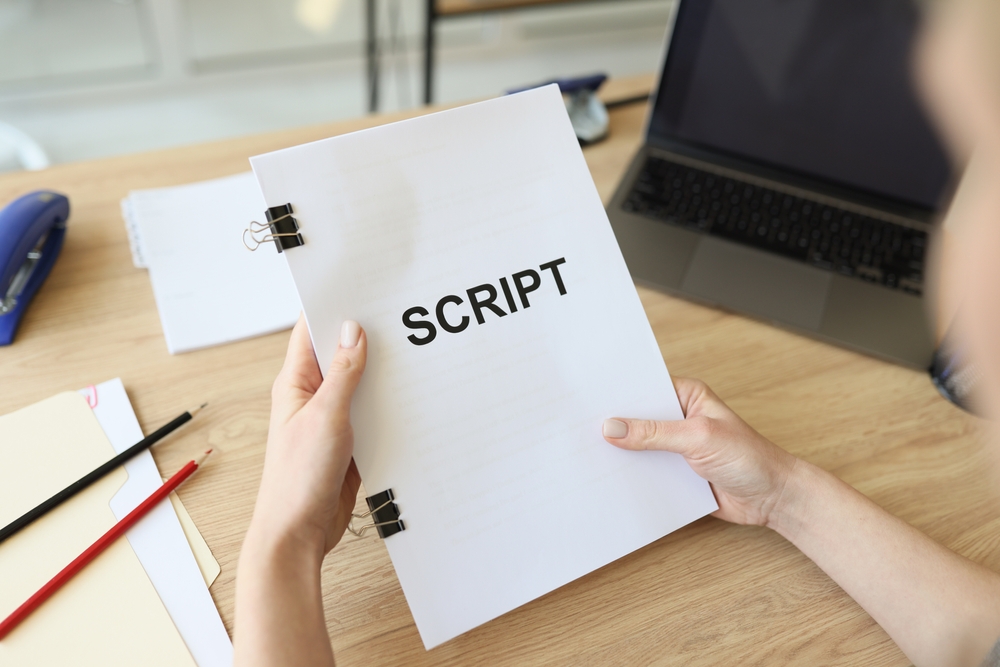
The client sent us their Chinese micro-drama script at 2:14 PM on a Friday. Eighty episodes, 2-3 minutes each, 180,000 Chinese characters total. They needed English and Spanish dubbed versions delivered in 14 business days.
Their previous project had taken 6 weeks with three separate vendors. The translation agency delivered the English script late. The dubbing studio couldn't reach the agency to clarify a character's accent direction. The subtitle house received the English audio but not the Spanish, so they sat on the Spanish subtitles for a week waiting. The final deliverable had misaligned subtitles in episodes 23, 44, and 67. The client's launch was delayed by 11 days. They lost a promotional window that cost them an estimated $45,000 in ad spend.
We delivered all 80 episodes in both languages in 11 business days. No misaligned subtitles. No delayed launch. One contract, one point of contact, one pipeline.
The three-vendor problem: why micro-drama localization falls apart
Micro-drama localization is not three separate tasks. It's one pipeline where every step depends on the previous one with zero buffer for miscommunication.
Translation creates the script. The script defines the character voices. Character voices drive casting. Casting determines recording schedules. Recording schedules set the timeline for audio post-production. Post-production defines when subtitles can be burned in. Subtitles determine the final delivery date.
When you split this across three vendors, you create handoff points. Every handoff point is a communication risk. And in micro-drama, where episodes are short and the volume is high, those risks multiply fast.
The most common failure patterns I see:
• The translator doesn't know the target audience profile, so the script reads like a formal document instead of natural dialogue.
• The translator delivers the script but doesn't include character voice notes, so the casting director has to guess.
• The dubbing studio records the audio but doesn't time-code it for the editor, so the post house has to manually sync 80 episodes.
• The subtitle vendor receives the audio as MP3 files with no episode mapping, so episodes get mislabeled.
• Nobody catches the fact that episode 31's script has a character name spelled three different ways across the pipeline.
Each of these is a minor issue. But on 80 episodes with two languages, they cascade. One character name inconsistency becomes 480 possible subtitle errors across all language versions.
Our pipeline: script to screen in one workflow
Here's the full SOP we run for micro-drama localization. Every project. Every language.
STAGE 1 — SCRIPT INTAKE & ANALYSIS (Day 1-2)
1. Receive source script with episode structure, character list, and tone direction
2. Run character name consistency audit — flag duplicates, aliases, honorifics
3. Create character voice profiles: age, accent, register, speech patterns, relationships
4. Identify culturally-specific jokes, slang, idioms, and plot points that need adaptation vs direct translation
5. Deliver script analysis brief to the translation team with character sheets and cultural adaptation notes
▼ ▼ ▼
STAGE 2 — TRANSLATION & CULTURAL ADAPTATION (Day 2-5)
1. Translate with natural dialogue register — micro-drama audiences expect conversational language, not literary prose
2. Adapt culturally-specific references: memes, honorific systems, social hierarchy markers, humor beats
3. Write character voice direction notes embedded in the script for the dubbing team
4. Perform lip-sync length check — target dialogue must fit within source mouth movements (tolerance: ±25% duration)
5. Internal QA: second linguist reviews for dialogue naturalness, character consistency, and episode continuity
▼ ▼ ▼
STAGE 3 — CASTING & RECORDING (Day 5-8)
1. Casting based on character voice profiles from Stage 1 — not just voice quality, but emotional range and style match
2. Record in professional studio with director present — the director has the full script context and character relationships
3. Record takes with performance variants: emotional intensity, pace options, alternate line readings for editor flexibility
4. Time-code all audio files with episode and scene markers for post-production sync
5. Deliver raw audio with QC report: any technical issues, retake requests, performance notes for the editor
▼ ▼ ▼
STAGE 4 — AUDIO POST-PRODUCTION (Day 8-10)
1. Clean, EQ, and normalize audio to broadcast standard (-14 LUFS for streaming platforms)
2. Sync dubbed audio to picture with frame-accurate timing
3. Mix with background music and effects — maintain source audio levels and scene dynamics
4. Lip-sync adjustment pass: stretch or compress dialogue to match mouth movements within tolerance
5. Final audio QC: listen-through for pops, clicks, level jumps, or sync drift
▼ ▼ ▼
STAGE 5 — SUBTITLING & DELIVERY (Day 10-11)
1. Burn in or deliver sidecar subtitles from the approved translated script
2. Time-code subtitles to the final mixed audio — not the raw recording
3. Character name consistency final check across all episodes and all language versions
4. Format delivery per platform spec: ReelShort, TikTok, YouTube Shorts — each has different subtitle placement and duration rules
5. Final deliverable package: dubbed video + subtitles + project files + character sheets + translation glossary
What one team changes vs three vendors
The biggest difference isn't speed. It's accountability. When one team manages the full pipeline, the translator who writes the character voice profile is working with the same casting director who uses it. The audio engineer who records the dubbing knows the lip-sync tolerance the translator was working with. The subtitle editor has direct access to the approved script, not a version forwarded through three email threads.
I'll be specific about what this looks like in practice:
• Character voice profile created by the translator at 10 AM, reviewed by the casting director at 2 PM the same day. Questions resolved before recording starts.
• The dubbing director reads the full translated script before entering the booth. They understand the character arc across 80 episodes, not just the lines for today's recording block.
• If the translator identifies a cultural reference that won't work in English — a Chinese honorific that implies a family relationship the target audience won't understand — the adaptation decision is made in Stage 2, before anyone enters a recording booth.
• The subtitle editor works from the final approved script and final mixed audio. No version mismatches. No 'which draft is this?' emails.
• Quality issues are caught by the team, not by the client during final review. A character name inconsistency in episode 31 gets flagged during the Stage 4 QC, not discovered by the audience on launch day.
The 80-episode project I mentioned at the top? The client's previous vendor stack — translation agency + dubbing studio + subtitle house — took 6 weeks and delivered with errors. We delivered in 11 business days with zero client-reported issues. Not because we're faster at any individual step. Because we don't lose time at handoff points, and we catch problems before they cascade.
Why micro-drama specifically demands this approach
Micro-drama isn't traditional film or TV localization. The volume is extreme — 80 episodes at 2-3 minutes each is the equivalent of a full-season TV show compressed into a fraction of the runtime. The turnaround is brutal — platforms like ReelShort and TikTok operate on content calendars that don't wait for vendor coordination. And the audience tolerance for quality issues is essentially zero — a viewer who encounters a misaligned subtitle in a 2-minute episode doesn't finish the episode. They scroll.
One team. One pipeline. One contract. That's what micro-drama localization needs.
Artlangs Translation manages the complete micro-drama localization pipeline: script translation and cultural adaptation, character voice direction, professional dubbing with time-coded delivery, audio post-production and mixing, and platform-ready subtitling. One team, one contract, one point of contact from source script to final deliverable. We've handled multi-language micro-drama projects from 20 to 80+ episodes with turnaround as fast as 11 business days. If you're juggling three vendors for your short drama localization, the overhead isn't saving you money — it's costing you time.