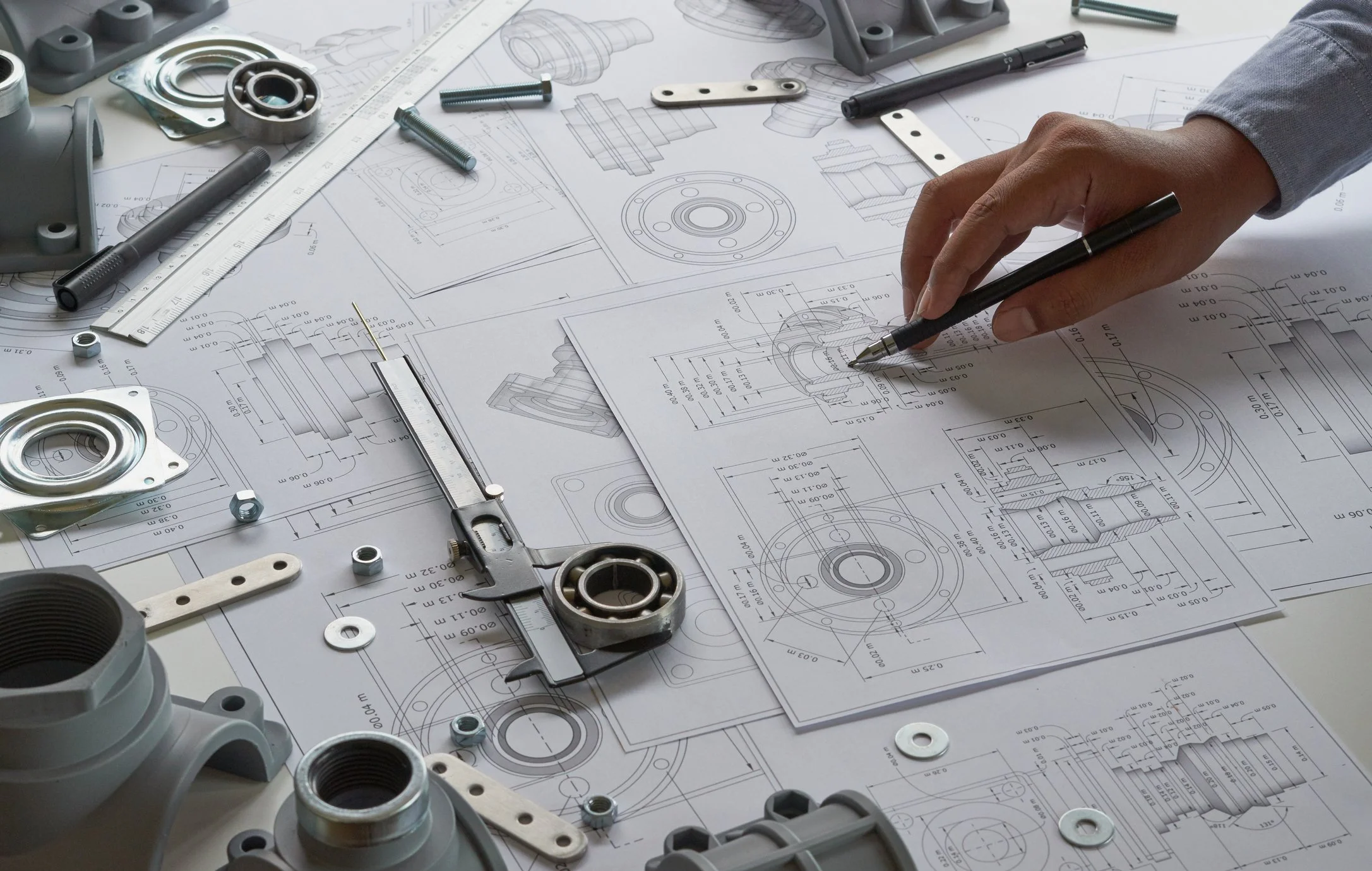
Patents in mechanical manufacturing and automation technologies turn on far more than clever claims. The real story unfolds in the CAD drawings—layered assemblies of gears, actuators, sensors, and tolerances that examiners and competitors must understand at a glance. When those drawings cross borders, every label, dimension note, and reference numeral has to land exactly right in the target language. A single mismatch between a figure and the written description can trigger an office action, force amendments, and delay grant by months.
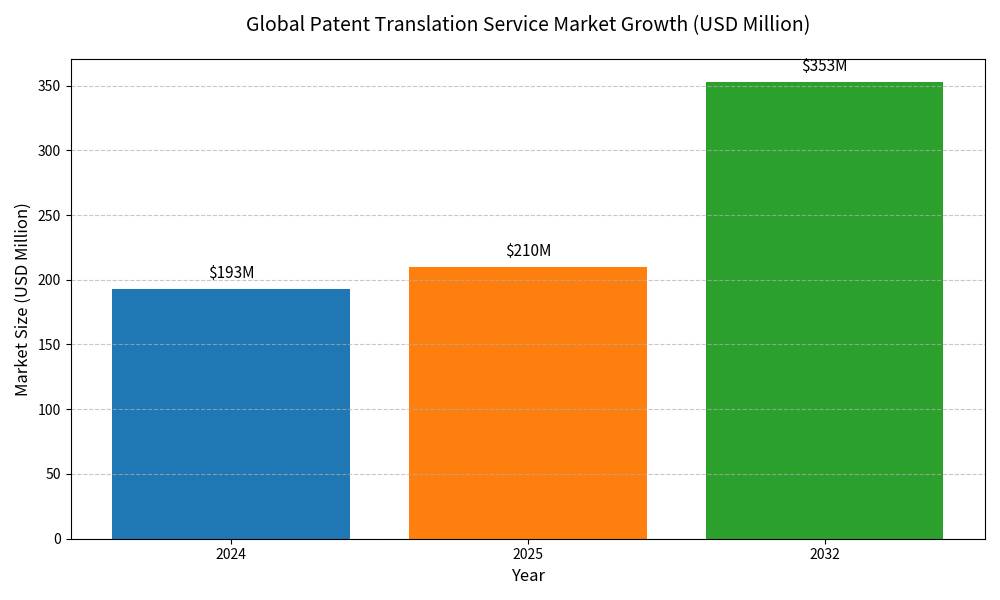
The numbers tell the scale of the challenge. Global patent filings topped 3.7 million in 2024, up 4.9 percent year-over-year, with mechanical engineering and automation sectors forming a substantial share of PCT applications. China alone accounted for roughly half of those filings. At the same time, the specialized market for patent translation services is expanding rapidly, projected to rise from USD 193 million in 2024 to USD 353 million by 2032 at a compound annual growth rate of 9.1 percent.
Yet accuracy remains elusive. According to the Steinbeis Institute, 81 percent of intellectual-property professionals have encountered translation errors in patents, more than 25 percent of which caused severe damage to the scope of protection, while 58 percent view such errors as a latent risk to entire portfolios. In mechanical and automation patents, the risk concentrates in the drawings themselves.
Why reference numerals create the biggest headache
Patent offices worldwide enforce a strict rule: every part number in a drawing—whether 10 for a motor housing or 25 for a control valve—must appear in the specification exactly as labeled, and vice versa. No extras, no missing references, no creative re-numbering after translation.
Examiners at the EPO, USPTO, or CNIPA treat any discrepancy as a clarity defect. The result? A formal objection demanding corrected drawings and an updated description. Inventors who translated the CAD file in isolation often discover too late that the translated specification now refers to “part 15” while the figure still shows the original-language label. The fix requires re-drafting, re-submission, and fresh examination fees—costs that quickly climb into five figures and push grant timelines back six to twelve months.
The reliable workflow: extract, translate, reintegrate
Modern engineering software turns this headache into a repeatable, auditable process. The key is separating text from geometry without touching the underlying vectors.
ExtractionIn AutoCAD, SolidWorks, or comparable tools, specialized utilities (such as TransTools or integrated drawing export functions) pull every translatable string—titles, callouts, dimensions, bill-of-material entries—into a clean Excel or Word table. Reference numerals stay untouched; only descriptive text moves. Layers and positions are logged so nothing gets lost.
TranslationA technical translator with mechanical or automation domain knowledge works from the table. Context notes highlight which labels belong to which assembly view. Crucially, the translator cross-checks every reference numeral against the already-translated specification to guarantee one-to-one correspondence. Ambiguous terms (“actuator rod” versus “push rod”) are clarified with the inventor before finalizing.
Seamless reintegrationThe same utility writes the approved translations back into the native CAD file. Text height, font, and line breaks adjust automatically for language expansion—German text often grows 25–30 percent, Chinese may require tighter kerning—while preserving original placement and legibility. The drawing remains fully editable; layers stay intact for future revisions.
The entire loop typically takes days rather than weeks, and the output meets every patent-office formatting rule because the geometry never left its native environment.
Verification closes the loop
A final side-by-side review is non-negotiable. An engineer fluent in both languages walks through each figure and corresponding paragraph, confirming that “part 42” in the drawing still matches the translated description of the same solenoid valve. Many firms add a second linguistic pass focused solely on consistency. This step alone eliminates 90 percent of the objections that otherwise derail mechanical patents.
The payoff is more than compliance. Accurate, localized CAD drawings accelerate examination in key markets, strengthen enforceability, and make technology transfer smoother for licensees. Companies that treat drawing localization as an afterthought pay twice—once in rushed corrections and again in lost market time.
Mechanical and automation innovators already operate under tight development cycles. The last thing they need is a translation snag holding up protection in Europe, the United States, or Asia. By following a disciplined extract-translate-reintegrate workflow and insisting on ironclad reference-numeral alignment, they turn complex CAD drawings into a competitive advantage rather than a compliance bottleneck.
For companies that prefer to focus on innovation instead of translation logistics, partnering with proven specialists makes all the difference. Artlangs Translation brings exactly that reliability to the table. Proficient in more than 230 languages and honed over years of focused work in translation services, video localization, short-drama subtitle localization, game localization for short dramas, multilingual audiobook dubbing, and multilingual data annotation and transcription, the team has delivered hundreds of flawless technical projects. Their track record shows that even the most intricate mechanical patent CAD drawings can be localized accurately, on time, and in perfect sync with every specification—letting inventors secure global protection without the usual revisions and delays.