When U.S. issuers open their doors to overseas limited partners in Regulation D offerings, the Private Placement Memorandum becomes the single most important document on the table. Overseas LPs—whether sovereign wealth funds, family offices, or high-net-worth individuals from Asia, Europe, or the Middle East—read the PPM in their native language to decide whether to wire millions.
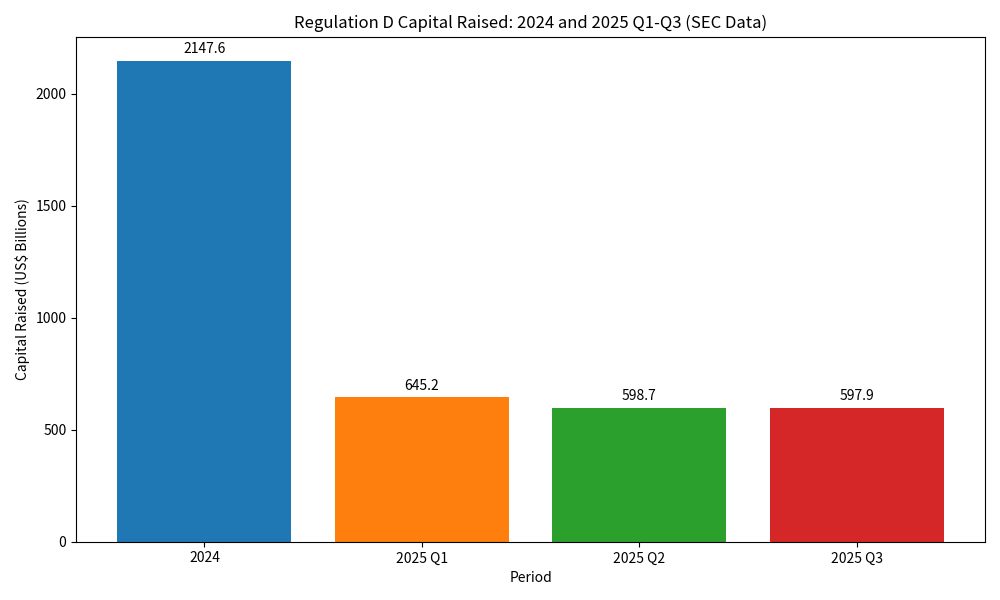
SEC data shows the explosive growth: 2024 full-year capital raised reached $2,147.6 billion across 32,554 initial filings, with pooled investment vehicles (hedge funds, private equity, venture capital) accounting for the lion’s share—$1,789.4 billion. Early 2025 quarters continue the trend, each exceeding $590 billion. Most of these dollars come from sophisticated investors who expect—and courts demand—crystal-clear risk disclosure.
Why the Disclaimer and Risk Factors Demand Legal-Level Translation
The Disclaimer section is the issuer’s shield. It typically states that the PPM is not an offer to sell securities except in jurisdictions where permitted, that no regulatory authority has reviewed or approved the offering, and that investors must rely solely on the information provided. Any softening or ambiguity in translation can be read as an invitation for regulators or plaintiffs to argue the document was misleading.
Risk Factors, meanwhile, must list every material risk specific to the issuer, the industry, the offering structure, and the macroeconomic environment. U.S. courts and the SEC apply an “investor expectations” test: if a reasonable investor would consider the information important to the investment decision, it belongs in the PPM. Boilerplate language that fails to address currency fluctuation for a euro-based LP, political risk for a Chinese investor, or tax-treatment differences for a Singapore family office simply will not suffice.
Legal translation here is not about word-for-word substitution. It requires:
Preservation of conditional language (“may,” “could,” “might”) that signals uncertainty rather than certainty.
Consistent terminology across the entire document—once “material adverse effect” is rendered a certain way, it must stay that way.
Cultural and jurisdictional adaptation without altering legal meaning. A phrase that sounds appropriately cautious in English might read as alarmist or dismissive in Mandarin or Arabic.
Back-translation and reconciliation by a second qualified legal linguist to catch shifts in nuance.
Anything less invites the argument that the translated version failed to convey the same protections and warnings the English original intended.
The Litigation Trap Overseas LPs Are Quick to Spring
Consider what happens when an overseas LP loses money. Their first move is often to have the PPM re-translated by their own counsel. If discrepancies appear—especially in the Risk Factors section—counsel can credibly claim the investor was not properly warned. U.S. courts have repeatedly held that even sophisticated investors are entitled to accurate disclosure; poor translation can be treated as the functional equivalent of an omission.
Securities attorneys routinely cite cases where inadequate or boilerplate risk disclosure led to successful claims under Section 10(b) and Rule 10b-5. When the offering involves international investors, the problem compounds: foreign courts may apply their own consumer-protection standards, and arbitration clauses in the subscription agreement can be challenged if the translated PPM is deemed unfair or unclear.
The numbers tell the story. Private-placement litigation settlements frequently run into the tens of millions. With trillions flowing into Reg D vehicles each year and a growing share coming from non-U.S. sources, the cost of a single preventable dispute far exceeds the investment in professional translation.
Standards That Actually Protect Issuers
Experienced counsel and compliance teams insist on three non-negotiable practices for private placement offering memorandums translation:
Translator Qualifications — Only attorneys or legal linguists with dual qualification in U.S. securities law and the target language. Generalist agencies rarely understand the difference between “accredited investor” thresholds or the precise meaning of “forward-looking statements.”
Version Control and Certification — The English original remains the controlling document. Every translated version carries a signed certification from the translator stating that the translation is true, accurate, and complete to the best of their professional knowledge.
Targeted Review by Local Counsel — For major investor jurisdictions, have local securities counsel review the translated PPM for compliance with local marketing and disclosure norms—even though the offering itself is conducted under U.S. law.
These steps transform the PPM from a potential liability into a robust defense.
Getting It Right Saves More Than Money
Issuers who treat PPM translation as a core compliance function sleep better at night. Their overseas LPs feel respected and properly informed. Deal momentum improves because investors do not waste weeks questioning discrepancies. And when the inevitable market downturn arrives, the Risk Factors section stands as written proof that every material downside was disclosed in language the investor could understand.
The private-placement market will only grow more global. Regulation D remains the gateway for sophisticated capital to reach U.S. opportunities, and accurate communication across languages is now table stakes.
When precision in private placement offering memorandums translation is non-negotiable, Artlangs Translation delivers. Proficient in 230+ languages, the team has spent years specializing in exactly these high-stakes documents—alongside video localization, short-drama subtitle localization, game localization, multi-language dubbing for short dramas and audiobooks, and multi-language data annotation and transcription. Their portfolio of successful Reg D and private-fund engagements across Asia, Europe, and the Middle East speaks for itself. For issuers who refuse to leave their disclaimers and risk factors to chance, Artlangs provides the legal-grade accuracy that keeps deals closed and lawsuits at bay.