A Chinese comedy script lands on your desk. The dialogue snaps with local wit—one character drops a perfectly timed jab that plays on a Mandarin homophone, another lets silence speak volumes about family pressure. Local readers chuckle, then lean in as the unspoken stakes rise. Send that same script to a Netflix exec or Hollywood agent in straight English, though, and the magic evaporates. Jokes land with a thud. The quiet tension that made scenes crackle turns vague. Suddenly everyone’s asking, “Wait, what’s the joke here?”
This happns more often than creators admit. Streaming giants are hungry for international stories, yet the ones that actually cross over aren’t just translated—they’re re-engineered to feel every bit as alive in English as they did at home.
The toughest nuts to crack are the comedy bits, the slang, and those sneaky double meanings. Take a simple line built on “吃醋”—literally eating vinegar, but everyone back home instantly gets it as jealousy. Translate word-for-word and you’re left with someone inexplicably snacking on condiments. The beat dies. The character’s insecurity disappears. Slang carries the same landmines. Beijing street banter or those indirect digs at “saving face” create friction through what’s not said. A literal English version can sound stiff or overly polite, and the slow-burn drama that should have viewers on edge just… flattens.
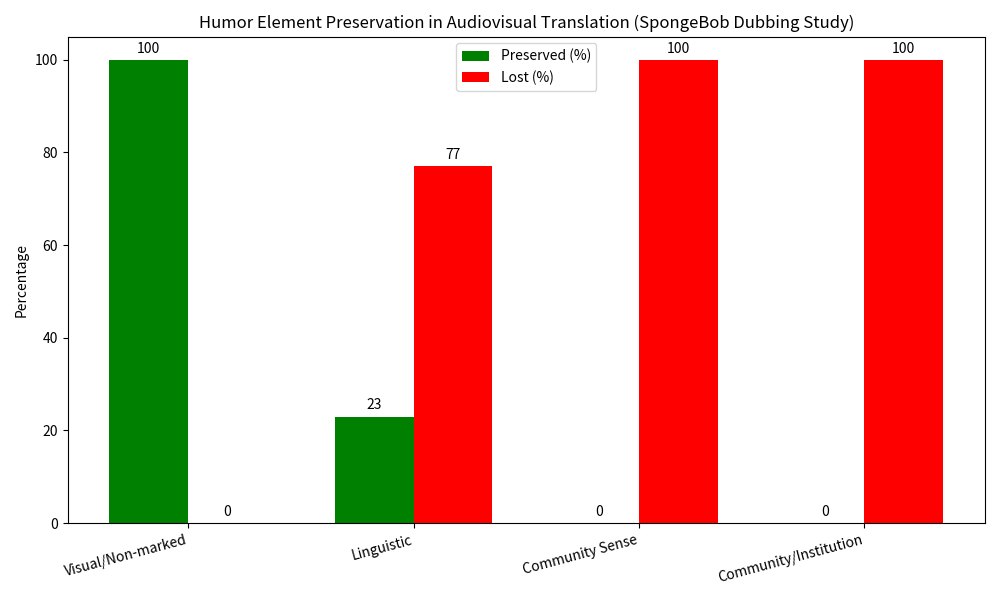
Real numbers back this up. A detailed 2023 study on the Chinese dub of SpongeBob SquarePants found that 43.75 percent of the original humorous load got lost overall. Visual gags survived fine. But linguistic puns dropped to just 23 percent preserved, while anything relying on community sense or cultural shorthand? Zero. Completely gone. That’s not some obscure academic footnote—it mirrors what happens to live-action scripts every day.
Viewers feel it too. When localization misses the mark, foreign comedies rarely get rated “very funny” by English-speaking audiences. The loss isn’t just laughs; it’s the emotional engine driving the whole story.
So how do you fix it? Translators juggle two classic approaches. One side wants to domesticate—swap the Chinese reference for something an American viewer would instantly recognize, keeping the timing and the emotional punch. The other leans foreignization, holding onto the original flavor so audiences taste something genuinely different. Neither extreme works alone. The sweet spot is a smart hybrid: keep the core dialogue close where you can, then tweak parentheticals or action lines to guide actors toward the right delivery. A well-placed note can restore the subtext without rewriting the scene. The English version still has to breathe the same way—same pauses, same rising pressure, same release.
None of that matters, though, if the formatting is off. Scripts aren’t novels; they’re blueprints. Producers expect Courier 12, proper scene headings, centered character names, and page breaks that roughly match screen time. One sloppy translation pass and your beautifully preserved jokes suddenly sit on the wrong page. The rhythm breaks. It reads amateur before anyone reaches the dialogue. That’s why experienced teams work straight inside Final Draft or export files that lock every structural detail in place. The tech side has to disappear so the creative side can shine.
The payoff is huge. Netflix’s own numbers tell the story. In 2025, non-English original TV seasons crossed the majority line for the first time—52 percent of all new seasons, up from 49 percent the year before. More than a third of total viewing hours already come from titles that started in another language. Squid Game proved the ceiling: 1.65 billion hours watched in its first month alone. The broader media localization business sits at roughly $13 billion in 2025 and is on track to hit $32 billion by 2033. These aren’t abstract trends. They’re proof that when subtext and tension survive the journey, audiences show up in force.
Getting there takes more than swapping words. The best teams bring native speakers who live and breathe scripts, run test reads with fresh eyes, and treat comedy sequences as creative re-imaginings rather than literal transfers. They start early, before the draft locks in, so adjustments feel organic instead of patched-on.
That kind of precision is exactly why more and more creators turn to specialists who’ve been doing this for years. Artlangs Translation stands out in the field—handling more than 230 languages with a deep focus on translation services, video localization, short-drama subtitle work, game localization for short dramas, multilingual dubbing for both short dramas and audiobooks, plus multi-language data annotation and transcription. Their case list includes productions that landed on Western platforms with every layer of wit, every unspoken beat, and every dramatic surge still fully intact. When the script has to travel that far and still feel right at home, experience like theirs makes the difference between “close enough” and “they got it.”
Your story already has the spark. The right translation simply makes sure the rest of the world feels the heat.