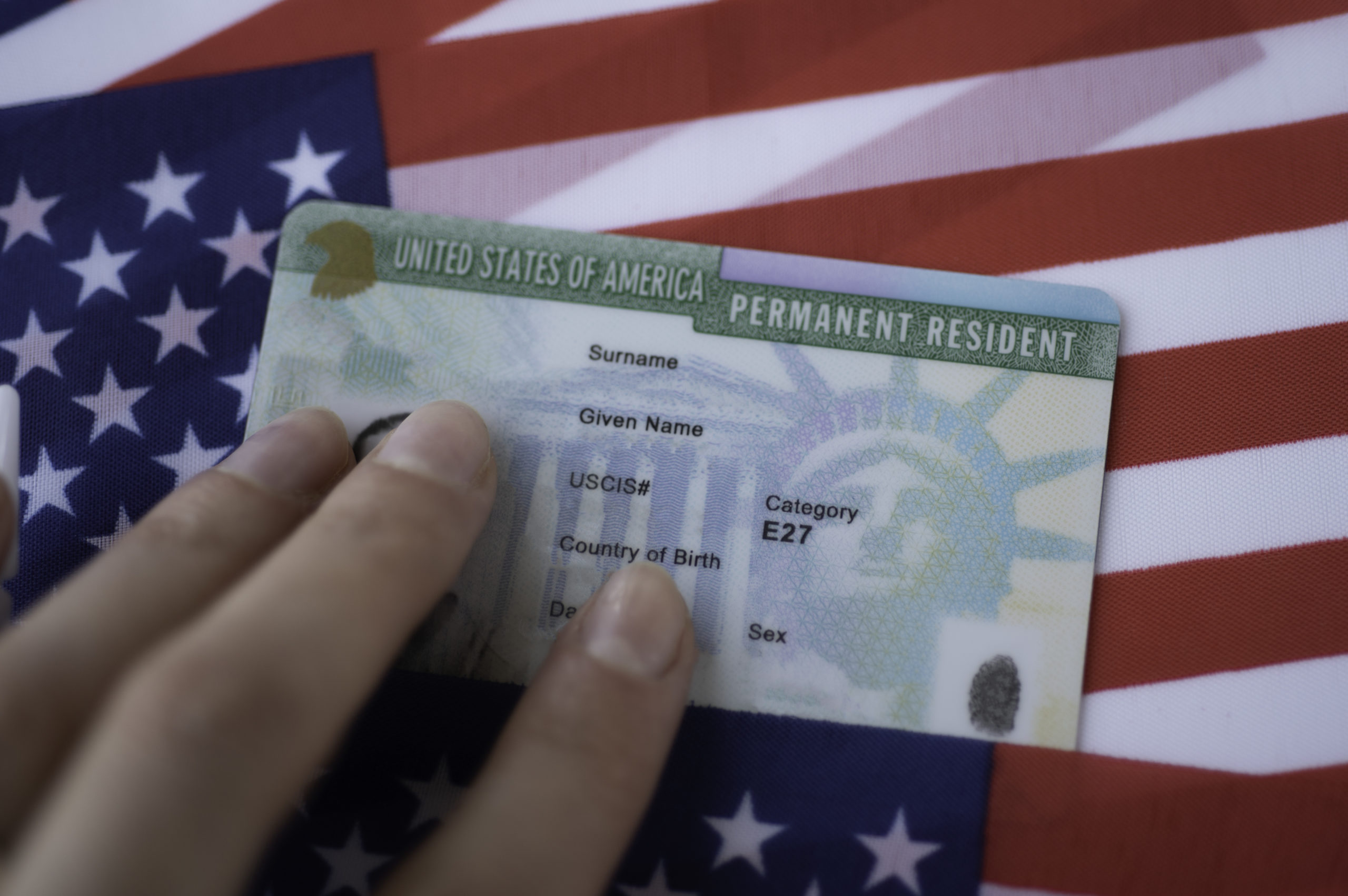
You have spent months gathering evidence. You have paid thousands in filing fees. You have checked every box on the I-485 or I-130. The last thing you expect is for your entire application to stall because an immigration officer couldn't read your birth certificate.
Yet, this happens constantly.
In the high-stakes environment of U.S. immigration, a "Request for Evidence" (RFE) isn't just a letter; it’s a delay that can last months. Often, these delays aren't caused by a lack of eligibility, but by a failure to adhere to the rigid, often misunderstood standards of USCIS certified translation services.
If you are preparing a filing for a Green Card, H-1B, or naturalization, understanding the difference between a "translation" and a "certified translation" is the difference between an approval and a rejection.
The Myth of the Notary Stamp
There is a persistent misconception among applicants that their documents must be notarized to be valid. Let's clear this up immediately: USCIS does not require notarization for translations.
Federal regulation 8 CFR 103.2(b)(3) is the law of the land here. It explicitly states that documents legally require a "certified translation."
What does that actually look like? It isn't a fancy gold seal (though those look nice). It is a signed statement from the translator that includes:
A Declaration of Competence: A statement affirming they are fluent in both English and the source language.
A Declaration of Accuracy: A promise that the translation is complete and accurate.
Contact Information: Full name, address, and signature.
If you submit a translation without this specific certification attached, the immigration officer is legally required to ignore the document.
The "Complete Translation" Trap
Here is where many applicants try to save money and end up paying with time. You might look at a dense bank statement or a divorce decree and think, "They only need to see the final verdict, not the three pages of legal jargon before it."
Submitting a summary or an extract is a fast track to rejection.
USCIS requires a word-for-word translation. This means:
Seals and Stamps: If there is a government stamp on the original, the translation must say
[Official Seal]or describe the stamp.Signatures: Even illegible scrawls must be noted as
[Signature].Irrelevant Text: Even the fine print at the bottom of a birth certificate must be translated.
The adjudicator needs to see a mirror image of your original document, just in English. If the visual layout doesn't match, or if paragraphs are missing, it raises red flags regarding authenticity.
Your Pre-Filing Checklist
Before you seal that envelope or hit submit, run your translated documents through this gauntlet. This is the same mental checklist experienced paralegals use:
[ ] Is the Certification Separate? Ensure the "Certificate of Accuracy" is a distinct page or section, signed by the translator (not you, and not a family member).
[ ] Are Proper Nouns Preserved? Names of people and places should generally not be translated (e.g., "Rio de Janeiro" should not become "River of January").
[ ] Is the Formatting Identical? Does the English version look like the foreign version?
[ ] Are "Illegible" Parts Marked? Don't guess. If the original is faded, the translation should state
[Illegible text].
Why Google Translate Won't Cut It
In an era of advanced AI, it is tempting to run your documents through a translation engine. For a dinner menu, that’s fine. For a federal legal proceeding, it is dangerous.
Machine translation engines struggle with:
Handwritten text: Most civil documents (especially older ones) contain handwriting that OCR technology misreads.
Legal nuance: A word that means "separated" in casual conversation might mean "divorced" in a legal context. A machine won't know the difference; a human translator will.
Accountability: You cannot cross-examine an algorithm. You need a human being who puts their name and reputation on the line to certify the work.
Choosing a Partner, Not Just a Vendor
When the safety of your immigration status is on the line, the "cheapest option" is rarely the safest. You need a provider with the infrastructure to handle sensitive data and the linguistic breadth to handle rare dialects.
This is where Artlangs Translation separates itself from the crowded field of generic agencies.
While many providers simply farm out documents to the lowest bidder, Artlangs has built a reputation on handling high-complexity linguistic projects for years. They don't just move words around; they manage meaning.
With mastery over 230+ languages, Artlangs has established itself as a heavy hitter in sectors far more demanding than simple documentation. Their portfolio includes:
Multimedia Localization: From video localization to subtitling short dramas.
Entertainment: Complex dubbing for audiobooks and gaming localization.
Tech Infrastructure: High-volume multi-language data annotation and transcription.
Why does this matter for your birth certificate? Because a company trusted to localize a complex video game script or produce subtitles for a global drama series possesses a level of quality control and project management that standard document mills lack. They understand that a single mistranslated word can ruin a user experience—or in your case, an immigration application.
If Artlangs can handle the nuance of character dialogue and the technical precision of data transcription, they can certainly ensure your H-1B or Green Card evidence is compliant, accurate, and ready for USCIS scrutiny.
Don't gamble with your future. Secure your paperwork with the same level of professionalism you’ve put into your life in the United States.