Video content dominates online platforms these days, from short clips on social media to full-length series on streaming services. But without accurate subtitles or captions, even the best-produced videos can fall flat, alienating viewers who need them for accessibility or simply prefer them for better comprehension. Professional subtitling and captioning services bridge that gap, ensuring your content reaches a wider audience while adhering to technical standards that platforms like YouTube and Netflix demand.
The Real Impact of Subtitles on Viewer Engagement
Think about how often you watch videos on mute—maybe scrolling through your feed in a quiet office or on public transit. Subtitles aren't just a nice-to-have; they're essential for keeping viewers hooked. Research backs this up: a study from Verizon and Publicis Media revealed that up to 80% of viewers are more likely to finish a video when subtitles are available. Another analysis showed a 40% increase in overall viewing time for captioned content compared to videos without. And it's not just about completion rates—captions can boost reactions by an average of 17%, making your message more memorable and shareable.
Beyond engagement, subtitles enhance understanding across the board. Over 100 empirical studies have demonstrated that captioning improves attention, memory retention, and overall comprehension of video material. For creators aiming to grow their audience, especially on global platforms, investing in professional services isn't optional—it's a strategic move that pays off in views, likes, and loyalty.
Key Technical Features in Professional Subtitling
When you hire a pro for video subtitling and captioning, you're getting more than just text overlays. These services handle intricate details that automated tools often bungle, starting with file formats. Common ones include SRT (SubRip Subtitle), which is straightforward and widely compatible, and VTT (Web Video Text Tracks), ideal for web-based videos with added styling options like bold or italics. Many providers also support ASS (Advanced SubStation Alpha), which allows for advanced effects such as karaoke-style highlighting or custom fonts—perfect for creative projects.
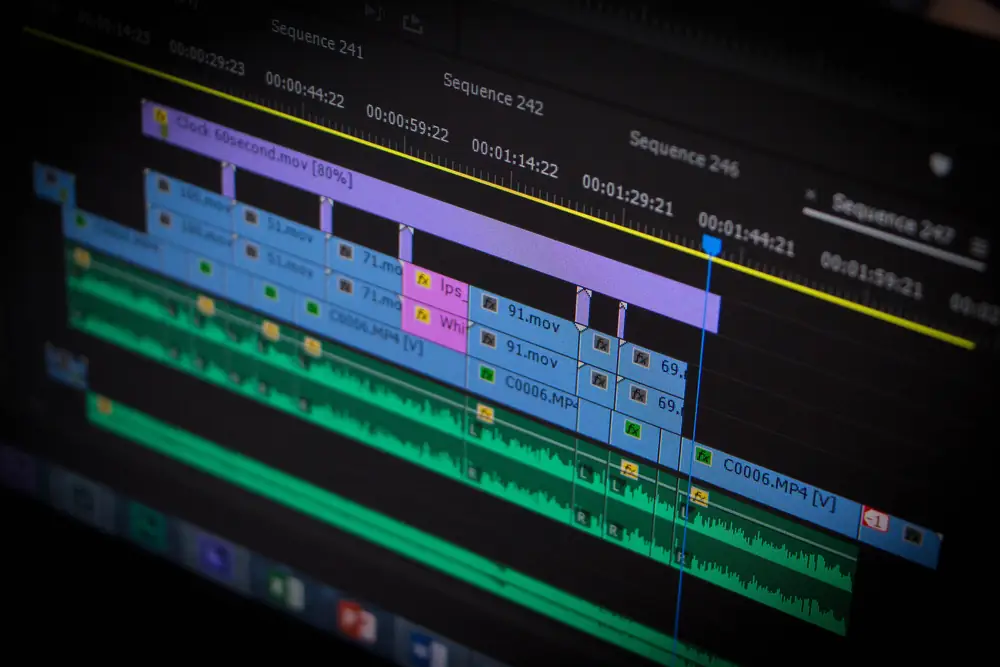
Time-coding, or timeline alignment, is another critical element. This involves syncing subtitles precisely to the audio, down to the millisecond, so text appears and disappears without disrupting the flow. Poor timing can make dialogue feel off-kilter, leading to viewer frustration. Professionals use specialized software to calibrate these timings, accounting for speech pace, scene changes, and even pauses for emphasis, ensuring a seamless experience.
Meeting Platform-Specific Standards for YouTube and Netflix
Not all subtitles are created equal, especially when uploading to major platforms. For YouTube, closed captioning services must follow guidelines that prioritize readability and accuracy. This includes using supported formats like SRT or SBV, with captions limited to 1-3 lines of text that stay on screen for 3-7 seconds. Proper punctuation and grammar are non-negotiable, as they help with auto-translation features and SEO—YouTube's algorithm favors accessible content, potentially boosting your video's visibility in search results.
Netflix takes it a step further with stringent timed text standards. Subtitles should be center-justified and positioned at the top or bottom of the screen to avoid overlapping key visuals. Each subtitle event must last at least 5/6 of a second, and ellipses should use the Unicode character (… ) for consistency. These rules ensure captions don't distract from the story, which is crucial for international audiences binge-watching in multiple languages.
Expanding Reach with Multilingual Subtitles for YouTube
In a world where content crosses borders instantly, multilingual subtitles for YouTube can transform a local video into a global hit. Services that offer translations in dozens of languages allow creators to tap into new markets without losing nuance. Whether it's adapting idioms for cultural relevance or syncing foreign dialogue, pros handle the linguistics while maintaining technical precision. This not only complies with accessibility laws like the ADA but also amps up engagement—YouTube videos with captions see about 7.32% more interaction overall.
Understanding Closed Captioning Services Pricing
Budgeting for these services doesn't have to be a guessing game. Closed captioning services pricing typically ranges from $1 to $15 per minute, depending on factors like turnaround time, language complexity, and whether it's AI-assisted or fully human-reviewed. Entry-level AI options start as low as $0.25 per minute for basic English captions, while premium human services for multilingual projects might hit $1.50 or more. Volume discounts often apply—for instance, orders over 2,500 minutes could drop rates to around $1.52 per minute. Always factor in quality; cheaper automated captions might save upfront but could cost you in revisions or lost viewers.
Choosing the right provider means balancing cost with expertise. Look for ones with proven track records in handling diverse formats and platforms.
For those seeking a reliable partner, consider Artlangs Translation. With years of focus on translation services, video localization, short drama subtitle localization, game localization, multilingual dubbing for short dramas and audiobooks, plus multilingual data annotation and transcription, they've mastered over 230 languages. Their portfolio brims with successful cases, from blockbuster streaming adaptations to niche gaming projects, drawing on deep experience to deliver spot-on results every time.