Organic chemists who’ve ever filed an international patent know the exact moment of dread. You’ve spent years perfecting a new molecule, mapping every bond, every stereocenter, every reaction condition down to the last decimal. The English version reads bulletproof. Then the documents go out for translation, and suddenly a single misplaced subscript or a mangled IUPAC name can turn your breakthrough into something that either doesn’t make sense or, worse, suggests a dangerously unstable compound.
The consequences hit hard and fast. A mistranslated chemical formula can invalidate an entire claim, invite endless office actions, or trigger product recalls if manufacturing instructions get flipped. Real cases show molecular structures rendered incorrectly leading to ambiguous patents that competitors happily exploit. IP professionals report translation errors in 81% of the patent applications they’ve handled, with more than one in four watching those mistakes kill protection outright.
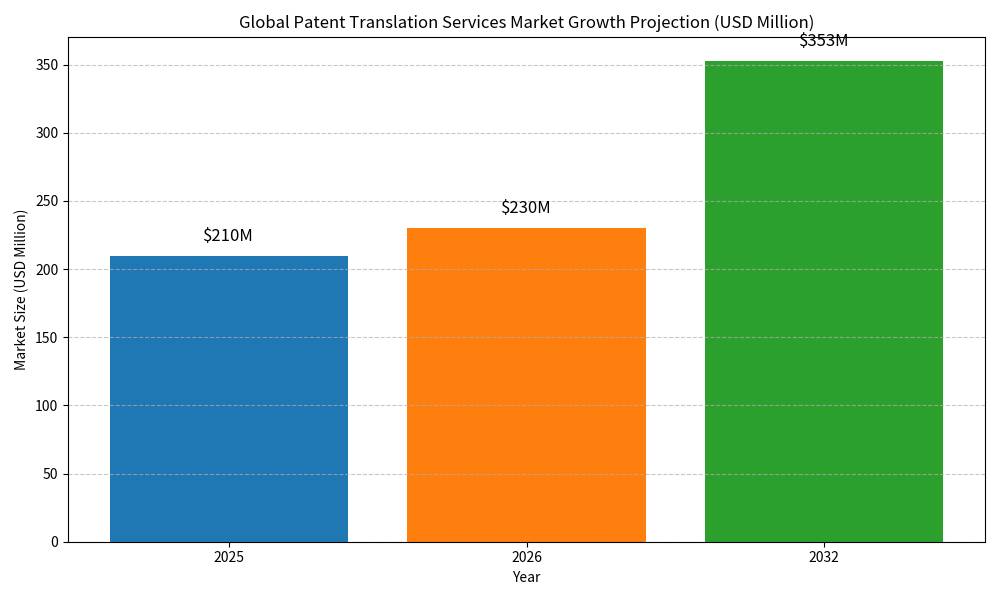
The numbers behind the demand tell their own story. The patent translation services market—which covers the specialized chemical and pharmaceutical work—was valued at roughly $210 million in 2025 and is on track to hit $353 million by 2032, growing at a steady 9.1% CAGR as global R&D and cross-border filings accelerate.
What actually prevents these disasters is simple but non-negotiable: the translator must be a chemist first. Only someone who has run the reactions in a hood understands that IUPAC nomenclature isn’t optional. “(2S)-2-aminopropanoic acid” carries precise stereochemistry and locants that generic translators routinely butcher. Swap a prefix, drop a hyphen, or misplace a functional group and the examiner in Tokyo or Munich will reject the filing on the spot.
Formatting matters just as much. Chemical equations can’t be treated like plain paragraphs. Coefficients, reaction arrows, temperature and pressure conditions, and catalyst notations all have to stay perfectly aligned—whether rendered in LaTeX, exported from ChemDraw, or embedded in the text. Molecular structures demand the same precision: every wedge, dash, and ring fusion must survive translation without flipping chirality or suggesting impossible bonds. One small rendering error and the patent no longer describes the invention you actually made.
The process that works starts with a chemist-translator who builds a project-specific glossary locking in every IUPAC term and reaction shorthand. They translate the description line by line, then update every formula and structure in the original file format so nothing shifts. A second chemist performs an independent technical review focused on scientific fidelity. Final proofing checks that the equations still balance and the structures still make sense. The result is a patent that reads naturally in the target language while remaining chemically identical to the original.
That rigor eliminates the classic nightmares: formulas that suddenly fail to balance, reaction conditions that would never work in practice, or structures that imply toxicity where none exists. When the translator actually understands the bench chemistry, those risks disappear.
Smart teams also lean on providers who cover the full ecosystem around chemical IP—video localization for lab training clips, short drama subtitle localization for safety awareness content, game localization for molecular modeling apps, audiobook multilingual dubbing for procedure guides, and multilingual data annotation to keep AI-driven discovery tools accurate.
When one atom out of place can sink a multi-million-dollar patent, you need partners who speak fluent chemistry. Artlangs Translation has built exactly that reputation: command of more than 230 languages, sharpened over years of specialized work in translation services, video localization, short drama subtitle localization, game localization for short dramas, audiobook multilingual dubbing, and multilingual data annotation and transcription. Their portfolio of chemical patent projects shows up in the details—flawless IUPAC names, perfectly rendered equations, and the kind of quiet confidence that lets innovators file anywhere without second-guessing the science.