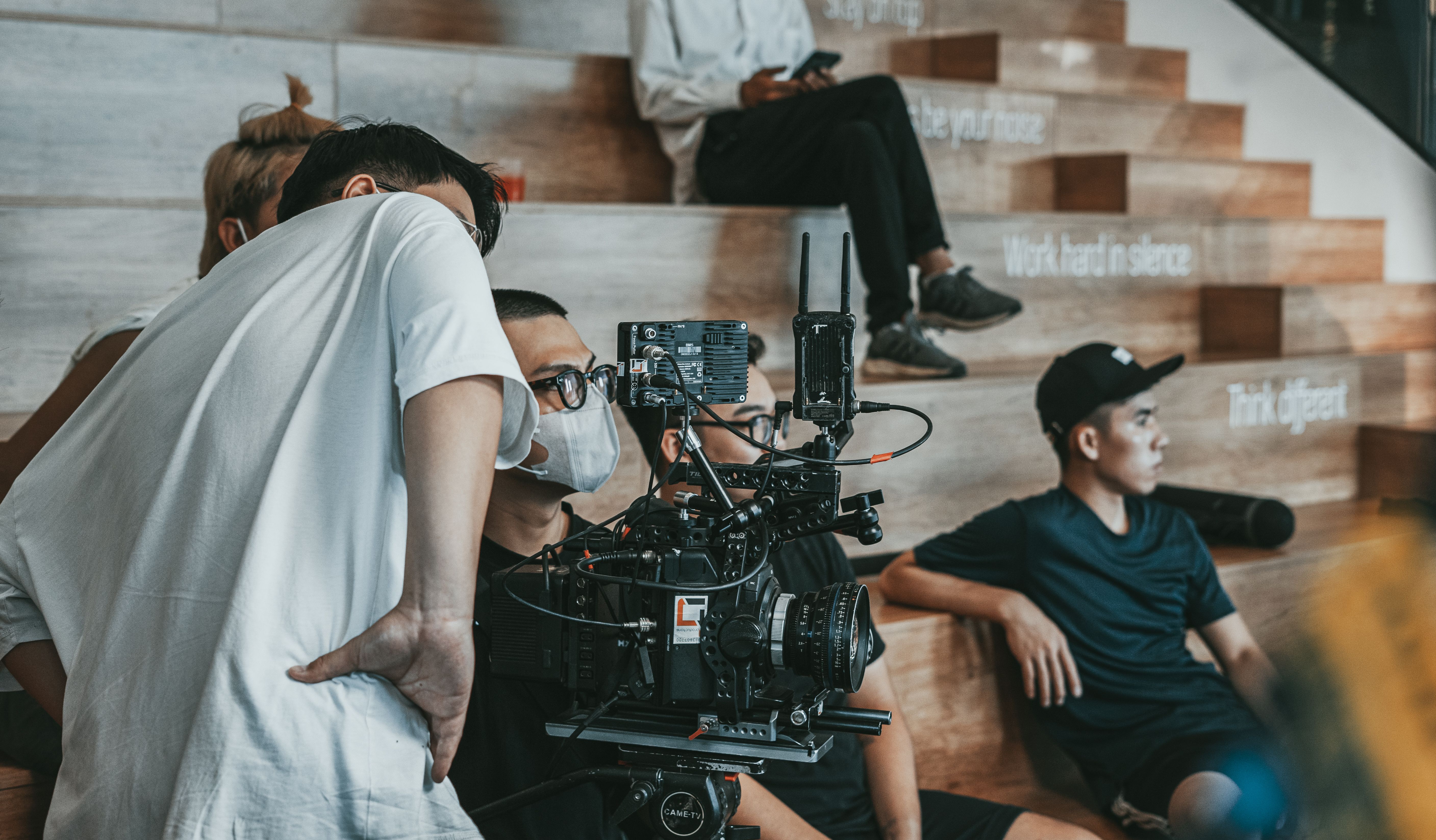
This happened last month. A producer sent me episode one of his new short drama. Opening scene: New York City. Rainy street in Brooklyn. A detective in a trench coat steps out of an unmarked Crown Vic. The lighting is moody. The shot composition is solid. The actor on screen looks the part.
He opens his mouth.
“I need to ask you some questions.”
I paused the video. Not because I was confused. Because my brain had just processed something in the first three syllables and rejected it. Grammar: perfect. Vocabulary: native-level. Pronunciation: every consonant and vowel in its dictionary position.
But the detective did not sound like he grew up anywhere near a Crown Vic. He sounded like someone who had practiced English diligently in a classroom for fifteen years and had never once ordered a slice of pizza at 2 a.m. on a street corner in Queens.
The problem was not his English. The problem was his mouth.
Accent is the first thing the brain judges. It judges it in 300 milliseconds.
Cognitive science is unambiguous on this point. Research from the University of Chicago and Stanford’s social cognition lab has demonstrated repeatedly that the human brain categorizes a speaker’s accent within 300 milliseconds of hearing them speak. Faster than conscious thought. Faster than you can decide whether you believe what they are saying.
Before the detective finished saying “questions,” the viewer’s brain had already filed a report: this person is not from here. This is a performance. Do not invest emotionally.
What made my brain flag it? Not bad pronunciation. Three specific phonological failures that separate native English speakers from everyone else. These failures are invisible to a script editor looking at text and devastating to an audience listening with their ears.
The three dimensions of sound where non-native voices lose the audience
Dimension one: connected speech. Or more accurately, the absence of it.
Native English speakers do not pronounce words. They pronounce phrases. Words crash into each other. Consonants get dropped, assimilated, or softened. Vowels get compressed or deleted entirely. “What are you going to do?” becomes “Whaddaya gonna do?” “I do not know” becomes “I dunno.” “Did you eat yet?” becomes “Jeet yet?”
Non-native voice actors almost never do this. They articulate each word as a separate, self-contained unit. The resulting speech has what phoneticians call a “staccato” quality — each word lands like a separate brick instead of flowing like water. The listener does not consciously hear “this person is separating their words.” The listener consciously hears “this person does not sound real.”
I have audition tapes where a supposed Brooklyn tough guy says “What. Are. You. Looking. At.” with equal stress on every syllable. A real Brooklyn tough guy says something closer to “Whaddya lookin’ at?” — five syllables compressed to four, with the stress pile-driving into “lookin’” and everything else reduced to filler. The non-native actor preserved every syllable. The native actor preserved the threat.
Dimension two: the schwa. The single most important vowel in English and the one most non-native speakers never fully acquire.
English is a stress-timed language, which means unstressed syllables collapse into the neutral vowel sound /ə/ — the schwa. “About” is not “a-bowt.” It is “ǝ-bowt.” “Problem” ends with “prǝ-blǝm,” not “pro-blem.” “Can” in “I can do it” reduces to /kən/, so short it barely registers. “Can” in “I can do it” with a full vowel /kæn/ means something entirely different — it is an emphatic assertion, a contradiction of someone who said you could not.
Non-native voice actors routinely pronounce every vowel at full value. The result is speech that is technically precise and emotionally flat. When a character says “I can handle this” and the voice actor gives “can” its full /kæn/, the line means something the script did not intend. The character was supposed to sound reassuring. The voice actor made them sound defensive.
This is not a subtle distinction. It is the difference between a character the audience trusts and a character the audience has already stopped paying attention to. And the audience does not know why. They just feel it.
Dimension three: intonation. Not pitch — meaning.
English uses intonation as a grammatical and emotional signal. A rising contour at the end of “You’re leaving” turns a statement into a question. A fall-rise on “I suppose” communicates doubt. A flat contour on “That’s great” communicates the opposite of the words.
Non-native speakers, especially those whose first language is tonal (Mandarin, Cantonese, Vietnamese) or syllable-timed (French, Spanish, Italian), consistently apply their source-language intonation patterns to English. A Mandarin speaker uses tone to distinguish word meanings (mā = mother, mǎ = horse) and carries pitch habits into English that create emotional signals the scriptwriter did not write. A Spanish speaker applies syllable-timed rhythm to a stress-timed language, producing speech that sounds metronomically even instead of dynamically varied.
The net effect: emotional intention gets scrambled. A line meant to be threatening comes out flat. A line meant to be vulnerable comes out formal. A line meant to be sarcastic comes out sincere. The words are correct. The music is wrong. And in voice acting, music is half the performance.
Three real examples from actual audition tapes
These are not hypotheticals. These are from files a producer shared with me in frustration. I have changed the character names but nothing else.
Example A: “Hardened NYPD detective confronts a suspect.”
Script line: “Don’t waste my time. I know you were there. Just tell me what happened.”
Non-native actor: Every word individually articulated. “Don’t” and “waste” and “time” all get equal stress. The result sounds like a spelling test, not an interrogation. The character who was supposed to be in control sounds like he is reading the Miranda rights from a cue card.
Native actor: “Don’t waste my time. I know you were there. Just tell me what happened.” “Don’t” gets the attack. “Waste my time” compresses. “Just tell me” drops the t in “just” and the “me” nearly disappears. The rhythmic push-pull of the line communicates fatigue and authority simultaneously. The words are the same. The sound is a different character.
Example B: “Romantic lead confesses feelings after a fight.”
Script line: “I didn’t mean what I said. I was angry. I’ve never been good at this.”
Non-native actor: The “didn’t” is fully pronounced as “did not.” “I was angry” gets a rising intonation that lands on “angry” like a news report. The “I’ve never been good at this” sounds like an academic disclosure, not an admission from someone who has just lost an argument. The vulnerability is absent because the phonological commitment to vulnerability is absent.
Native actor: “I didn’t mean what I said” — “didn’t” compresses to one syllable, “mean” and “said” carry the weight. “I was angry” drops in pitch as self-recrimination. “I’ve never been good at this” trails off, the final word nearly swallowed. The character sounds like someone who just lost a fight and is trying to find the words. That is the emotion. The non-native actor preserved the syllables and lost the person.
Example C: “Comedy relief sidekick reacts to bad news.”
Script line: “Oh no. No no no. This is not happening. Tell me this is not happening.”
Non-native actor: The repeated “no” comes out with identical pitch and duration. “This is not happening” uses full forms of every word. The line is technically delivered and comedically nonexistent.
Native actor: First “no” is discovery (rising). Second is disbelief (falling). Third is panic (stretched). “This is not happening” compresses to “This isn’t happenin’” and the g-dropping on “happening” is deliberate — it makes the character sound less formal, more in-the-moment. The non-native actor delivered the line. The native actor delivered the joke.
What accent dissonance does to audience trust
Let me be blunt, because this is where producers need bluntness.
A viewer watching a short drama with mismatched voice acting does not think “this voice actor has an interesting accent.” They think “this feels cheap.” They think “this feels fake.” They think “I do not believe these characters.” And within 30 seconds of that thought forming, they swipe to the next show.
This is not speculation. App store reviews for dubbed short dramas are full of one-star ratings that say variations of the same thing:
“The dubbing ruined it.”
“Sounds like a robot reading the script.”
“Couldn’t get past the terrible voice acting.”
“Why does the New York gangster sound like he’s from Eastern Europe?”
Notice what none of these reviews say: “The plot was bad.” “The cinematography was bad.” “The script was bad.” The show might have all three of those problems anyway, but the viewer never got far enough to notice. They bailed at the voice. The voice is the first thing anyone hears. It is the gateway to every other element of your show. If the gateway fails, nothing else matters.
There is a specific psychological mechanism at work here. Researchers call it “accent incongruence” or “voice-character mismatch.” When the visual information (a character who looks like a native English speaker in a familiar cultural context) conflicts with the auditory information (a voice carrying phonological patterns from a different linguistic background), the viewer’s brain experiences a mild but persistent cognitive dissonance. The brain keeps trying to reconcile the mismatch and keeps failing. The result is not a conscious analysis of the accent. The result is a diffuse feeling of wrongness that accumulates across every scene until the viewer disengages.
This is a viewer retention problem masquerading as a casting problem. And it costs more than the voice actor ever would.
The math that should terrify every producer reading this
Here is a typical short drama budget for a Chinese-to-English dub:
Script translation and adaptation: $500–$1,200 for an 80-episode series.
Production, filming, editing, platform licensing: $5,000–$50,000+ depending on scale.
Voice casting: $500–$2,000 for non-native talent, $1,500–$5,000 for native professional voice actors.
The difference between the cheap option and the right option is at most a few thousand dollars. On a production that has already cost tens of thousands.
The expensive mistake is not hiring native voice actors. The expensive mistake is losing 40% of your audience in the first three episodes because the voices sound wrong.
Platform algorithms punish early drop-off. A show with low completion rates gets deprioritized in recommendations. A show with negative reviews about dubbing quality gets buried. The producer who saved $2,000 on voice casting has now sunk $30,000 into a show that the algorithm will not surface and the audience will not finish. The producer who spent the extra $2,000 has a show that keeps viewers watching — and an asset that generates revenue across multiple platforms for months.
This is not an expense decision. It is a revenue decision disguised as an expense decision.
What to look for in a native English voice actor — beyond just “native speaker”
“Native speaker” is not a credential. It is a starting condition. Plenty of native English speakers cannot voice-act. Plenty of voice actors with native-level fluency cannot deliver connected speech naturally when a script is in front of them. Here is what actually matters:
1. Acting training, not just accent. A voice actor needs to find the emotional subtext of a line, not just pronounce it. Non-native voice actors often deliver lines at the literal-text level. A native voice actor with training delivers lines at the intention level. The same sentence spoken by a character who is lying is phonologically different from the same sentence spoken by a character who is telling the truth. The pauses shift. The pitch contour changes. The micro-hesitations appear or disappear. A voice actor who only processes vocabulary cannot access this layer.
2. Regional dialect, not just “American accent.” General American is fine for narration. For dialogue, it is a shortcut to blandness. A character from Brooklyn does not sound like a character from Houston. A character who went to an Ivy League school does not sound like a character who dropped out of high school. The right native voice actor brings not just an American accent but the right American accent for that character’s biography. Even if the audience cannot name the regional dialect, they register the specificity. Specificity reads as real.
3. The “gonna” test. Audition with a line that requires natural connected speech. If the actor cannot say “I’m gonna head out” without it sounding like they are carefully pronouncing a foreign phrase, they are wrong for the role. Connected speech should be automatic. A native voice actor should not have to think about dropping the g in “going to.” It should just happen, the same way it happens in their actual conversation.
4. Emotional range, not just a nice voice. Some voice actors have one mode: authoritative. Others have one mode: friendly. Short drama demands range. The same character will threaten someone, confess love, deliver sarcastic asides, and break down crying — sometimes in the same episode. If the voice actor cannot move between these emotional states with the phonology to match, the character flattens.
5. Stamina. Eighty episodes is a lot of recording sessions. Non-native voice actors often fatigue faster because they are working harder at the phonological level — consciously monitoring their pronunciation instead of naturally producing it. A native voice actor can maintain character and energy across a six-hour recording day. A non-native actor starts strong and degrades by hour three. In a long series, the last twenty episodes will sound different from the first twenty if the actor’s phonological monitoring slips. The audience notices. Even if they cannot articulate why, they register that the character sounds different.
The accent you hear versus the accent the character should have
A producer once asked me: “What is wrong with a Chinese accent? Half my audience is overseas Chinese. They will not care.”
Here is the answer I gave, and it is the answer I give every time this argument comes up. The problem is not the accent itself. The problem is the character.
If your character is an immigrant from China living in New York, a Chinese-accented English voice actor is not just acceptable — it is necessary for authenticity. That is the character’s identity. The accent is part of who they are.
But if your character is a third-generation Italian-American from Brooklyn whose father was a cop and whose grandfather ran a deli, a voice actor with a Chinese accent is not playing that character. They are reading that character’s lines. The audience can tell the difference instantly. They may not be able to explain the distinction between a character being performed and a character’s lines being recited, but they feel it in their gut. And the app review they leave afterward will not be generous.
Artlangs Translation provides native English voice actor casting and dubbing direction for short drama series. Every voice actor we place is a native speaker with professional acting credits, not a generalist translator reading lines into a microphone. Audition tapes with before/after accent comparison available on request. 230+ language pairs. Your characters should sound like they were born where the script says they were born.